English for Tourism in ASEANTourism EnglishASEAN Studies module
ASEAN Studies · Microcredential

English for Tourism in ASEAN

Language, Culture, and Regional Identity

An ASEAN Studies module that introduces learners to the role of English in tourism and intercultural communication across ASEAN. You explore ASEAN destinations, cultural diversity, tourism practices, and sustainable tourism while developing practical English communication skills for tourism contexts.

6Units
24 hAbout 4 h per unit
Self-pacedOnline learning
11Member states
Your route

Six units, one journey

Each unit takes about four hours. Finish it and pass its knowledge check to earn a stamp.

    Learning outcomes

    By the end of the module, you will be able to

    1. Explain the role of tourism in ASEAN regional cooperation and people-to-people connectivity.
    2. Identify cultural and linguistic diversity across ASEAN tourism destinations.
    3. Use English appropriately in common tourism and hospitality situations.
    4. Demonstrate intercultural communication skills when interacting with visitors from different ASEAN countries.
    5. Discuss sustainable and responsible tourism in the ASEAN context.
    6. Create a tourism-related product or communication material that promotes an ASEAN destination while respecting local culture and sustainability principles.
    How it works

    Learn, practise, and build one story

    Hear the English

    Model expressions, dialogues, and visitor messages come with a Listen button, so you can hear them read aloud as often as you like.

    Earn your stamps

    Finish every section of a unit and score at least 6 out of 8 on its knowledge check, and the unit is stamped in your passport.

    Build one story

    The tourism story you start in Unit 1 grows unit by unit into your final ASEAN Tourism Storytelling Project in Unit 6.


    Unit 01 · About 4 hours · Self-paced online learning

    ASEAN as a Tourism Region

    Understanding ASEAN through tourism, language, culture, and regional cooperation.

    Guiding questionHow can tourism and English communication help people understand ASEAN’s diversity and strengthen regional connections?

    Illustration of a ferry crossing a calm sea between islands, with a dotted flight path linking them.
    Unit 1Overview
    A · Unit overview

    Welcome to Unit 1

    Tourism provides opportunities for people to discover new places, learn about different cultures, communicate across languages, and build relationships with people from other countries. In Southeast Asia, tourism also creates opportunities for regional cooperation and mutual understanding.

    The Association of Southeast Asian Nations (ASEAN) brings together countries with diverse histories, languages, traditions, landscapes, and tourism resources. Although these countries have distinct national identities, they also share opportunities and challenges in developing tourism, protecting cultural heritage, supporting local communities, and promoting sustainable development.

    In this unit, you will explore ASEAN as a tourism region. You will learn about ASEAN’s member states, understand the relationship between tourism and regional cooperation, and examine how English can facilitate communication among visitors, tourism professionals, and local communities.

    You will also begin developing a tourism story about an ASEAN destination. This preliminary work will contribute to the final ASEAN Tourism Storytelling Project at the end of the module.

    BLearning outcomes

    After completing this unit, you will be able to:

    1. Describe ASEAN and identify its member states.
    2. Explain the role of tourism in connecting people and communities across ASEAN.
    3. Identify opportunities and challenges associated with ASEAN tourism.
    4. Explain how English can support tourism communication in a multilingual region.
    5. Develop a short English-language introduction to an ASEAN tourism destination.
    D · Pre-learning activity

    What do you know about ASEAN?

    15 minutes

    Before studying the unit, reflect on your existing knowledge.

    Activity 1Reflect

    Tourism destinations in ASEAN

    Write down three tourism destinations in Southeast Asia that you know. They may be natural attractions, cultural heritage sites, cities, or community-based tourism destinations. For each destination, note the country and what makes it interesting.

    Illustration of Borobudur Temple in Central Java.ExampleBorobudur TempleIndonesia

    Buddhist heritage and architecture

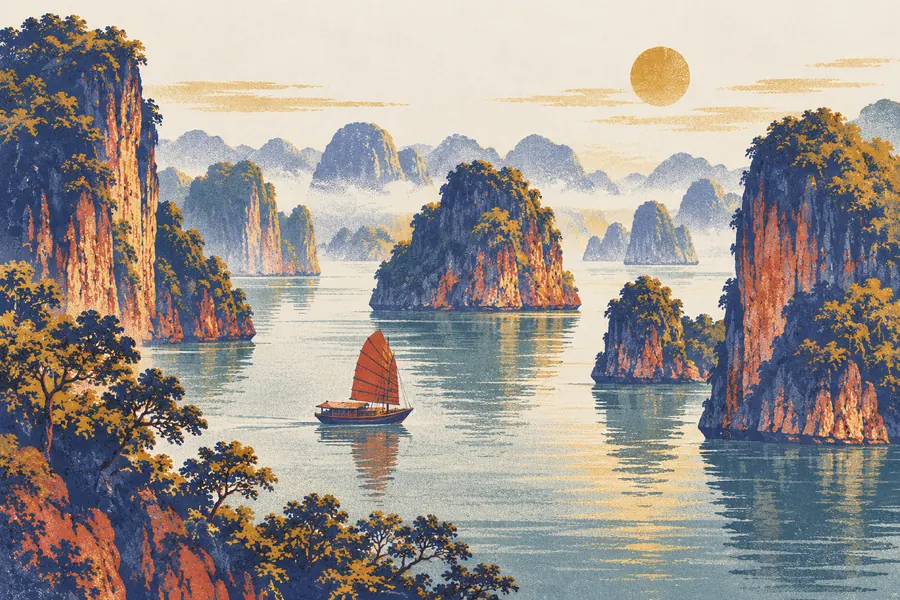
    Illustration of limestone islands in Ha Long Bay.ExampleHa Long BayViet Nam

    Limestone islands and seascapes

    Illustration of Angkor Wat reflected in its pool.ExampleAngkor Archaeological ParkCambodia

    Historical temples and Khmer heritage

    01
    02
    03

    Reflection questions

    1. What similarities can you identify among these destinations?
    2. What makes each destination culturally or geographically distinctive?
    3. What language might visitors use when communicating with local tourism professionals?
    4. How could tourism help visitors understand the people and cultures of Southeast Asia?

    There are no right or wrong answers at this stage. Your responses will help you connect your existing knowledge to the new concepts introduced in this unit.

    E · Learning material · Topic 1

    Understanding ASEAN

    40 minutes

    1.1What is ASEAN?

    The Association of Southeast Asian Nations (ASEAN) is a regional organisation established on 8 August 1967 through the Bangkok Declaration. Its founding members were Indonesia, Malaysia, the Philippines, Singapore, and Thailand.

    Over time, ASEAN expanded to include Brunei Darussalam, Viet Nam, Lao PDR, Myanmar, Cambodia, and Timor-Leste. Timor-Leste became ASEAN’s eleventh member state in October 2025.

    ASEAN promotes regional cooperation across areas such as political and security relations, economic development, and sociocultural cooperation.

    Tourism is one of the areas in which ASEAN member states cooperate. Such cooperation can support regional connectivity, tourism promotion, professional development, cultural exchange, and sustainable tourism initiatives.

    The 11 ASEAN member states

      Tap a country to find it on the map. The year shows when each country joined ASEAN.

      The countries are not identical in their economic conditions, languages, religions, political systems, or tourism resources. Understanding these differences is important when communicating with visitors and presenting the region responsibly.

      1.2What makes ASEAN distinctive?

      ASEAN offers a wide variety of tourism experiences. These include historical sites, religious heritage, traditional arts, food, urban attractions, beaches, mountains, forests, and community-based tourism. Consider the following examples:

      These examples illustrate the diversity of the region. They are starting points for exploration rather than complete descriptions of each country.

      No single destination represents an entire nation. Tourism communication should recognise differences among regions, communities, and individual experiences.

      1.3From individual destinations to a regional tourism experience

      A visitor may travel to one ASEAN country or visit several countries during the same trip. From the visitor’s perspective, the experience may involve multiple destinations, transport systems, languages, cultural practices, and tourism services.

      Regional cooperation can help address some of these connections through shared promotion, tourism standards, professional development, and efforts to improve visitor experiences.

      ASEAN’s tourism cooperation includes work by ASEAN tourism ministers, national tourism organisations, and specialist committees. These mechanisms help coordinate tourism-related initiatives across member states.

      However, ASEAN should not be understood as a single country or as a tourism destination with one uniform culture. Regional cooperation works alongside the distinct identities, laws, policies, and traditions of individual member states.

      Key concept

      ASEAN tourism combines regional connections with national and local diversity.

      E · Learning material · Topic 2

      ASEAN as a tourism region

      45 minutes

      2.1Why does tourism matter?

      Tourism involves more than travelling to attractive places. It can connect visitors with local people, create demand for goods and services, support cultural activities, and provide opportunities for learning. Tourism can contribute to:

      Economic opportunities

      Hotels, restaurants, transport providers, tour guides, local artisans, and small businesses may benefit from tourism spending.

      Cultural exchange

      Visitors can learn about local history, traditions, food, and everyday life through respectful interaction with host communities.

      Regional connectivity

      Tourism can encourage travel and interaction between people in different ASEAN countries.

      Employment and professional development

      Tourism creates demand for communication, hospitality, guiding, management, and other professional skills.

      Heritage and environmental awareness

      Well-managed tourism can support conservation and increase public appreciation of cultural and natural heritage.

      These benefits are not automatic

      Tourism can also contribute to:

      OvercrowdingEnvironmental degradationPressure on local resourcesCultural commodificationUnequal distribution of income

      The quality of tourism development therefore matters as much as the number of visitors.

      2.2Tourism and ASEAN cooperation

      ASEAN tourism cooperation seeks to strengthen the region’s tourism development through collaboration among member states and relevant stakeholders.

      The ASEAN tourism sector has established regional mechanisms for tourism policy, competitiveness, sustainable and inclusive tourism, tourism resources, and professional development. ASEAN has also developed an Action Roadmap for Sustainable Tourism Development to guide regional collaboration and sustainability priorities.

      These initiatives illustrate how tourism can connect local experiences with broader regional goals. For example:

      Local

      A community in Indonesia develops a cultural tourism programme that preserves local traditions and creates employment.

      Regional visitors

      Visitors from Malaysia, Thailand, or other countries participate in the experience.

      Communication

      Tourism professionals explain the significance of local practices, establish expectations, and encourage responsible visitor behaviour.

      The activity takes place locally, but it can contribute to wider regional understanding.

      2.3Opportunities and challenges

      Tourism development in ASEAN presents opportunities as well as challenges.

      Opportunities
      Possible challenges
      Cultural exchange and mutual understanding
      vs
      Cultural stereotyping or misunderstanding
      Employment and local enterprise
      vs
      Unequal distribution of tourism income
      Regional destination promotion
      vs
      Competition between destinations
      Heritage and nature appreciation
      vs
      Environmental damage and overcrowding
      Professional learning and mobility
      vs
      Uneven access to training and technology
      Multilingual communication
      vs
      Language barriers and communication breakdowns

      These issues require cooperation among governments, businesses, tourism professionals, local communities, and visitors.

      Think critically

      A destination can become more popular without becoming more sustainable. What measures could help ensure that local people benefit from tourism while their cultural and natural resources are protected?

      E · Learning material · Topic 3

      English and regional communication

      35 minutes

      3.1English in tourism contexts

      ASEAN is multilingual. People use national languages, regional languages, Indigenous languages, and other languages in their everyday lives.

      English can serve as a shared language in tourism when people do not speak one another’s first languages. It may be used in travel information, hotel services, tour guiding, airport communication, destination marketing, and online reviews.

      For example, an Indonesian tour guide may use English to explain a heritage site to visitors from Viet Nam, Thailand, or Singapore.

      The guide does not need to sound exactly like a speaker from Britain or the United States. The priority is clear, respectful, and effective communication.

      Successful tourism communication involves more than grammatical accuracy. It also requires listening, checking understanding, explaining unfamiliar concepts, and responding appropriately to different communication needs.

      3.2Essential English functions for tourism

      In this module, you will gradually develop language skills for common tourism situations. Tap Listen to hear each expression.

      Welcoming visitorsWelcome to Yogyakarta. It is a pleasure to have you here.
      Introducing a destinationBorobudur is a Buddhist temple complex in Central Java, Indonesia.
      Explaining cultural significanceThis site is important because of its historical and religious significance.
      Giving recommendationsIf you are interested in local culture, I recommend visiting the traditional market.
      Giving advicePlease wear comfortable footwear and follow the site’s visitor guidelines.
      Checking understandingWould you like me to explain that in more detail?
      Clarifying informationLet me clarify that point for you.
      Encouraging responsible behaviourPlease avoid touching the historic structures.

      These expressions are useful starting points. They should be adapted to the destination, audience, communication situation, and local requirements.

      3.3Communicating across cultures

      Effective intercultural communication requires awareness that visitors may have different expectations concerning greetings, personal space, religious practices, food, dress, photography, and appropriate behaviour.

      However, cultural awareness should not become stereotyping. Not every person from a particular country shares the same preferences or behaviour.

      Instead of assuming that all visitors from one country behave in a particular way, tourism professionals can use polite questions, observe individual needs, and provide clear explanations. Consider the difference:

      Less appropriatePeople from your country always prefer this kind of food.
      More appropriateWould you prefer a local dish, a vegetarian option, or something else?

      The second expression recognises individual preferences and invites communication.

      3.4A practical communication example

      Imagine that you are a tour guide introducing a cultural attraction to visitors from another ASEAN country. You might say:

      Your guideIntroducing Borobudur to visitors from another ASEAN country
      Good morning, everyone. Welcome to Borobudur.1 Today, we will explore the site’s history, architecture, and cultural significance.3 Borobudur is an important Buddhist heritage site in Indonesia.2 As we walk around the complex, please follow the visitor guidelines and respect the site.4 If you have any questions, please feel free to ask.5

      This short introduction combines several skills. Tap a skill to see where it appears.

      You will develop these skills further in Unit 3, English for Tourism Communication, and Unit 4, Intercultural Communication in ASEAN Tourism.

      E · Learning material · Topic 4

      Tourism, identity, and responsibility

      35 minutes

      4.1Tourism as a way to understand regional identity

      Tourism provides opportunities to explore how local, national, and regional identities interact.

      A visitor to Indonesia may learn about a local tradition in one community. A visitor to Cambodia may explore Khmer architectural heritage. A visitor to Timor-Leste may encounter distinctive cultural practices and landscapes.

      These experiences can deepen understanding of individual communities while introducing visitors to the wider diversity of Southeast Asia.

      ASEAN regional identity does not require people to abandon their national or local identities. Instead, it can develop through mutual respect, cooperation, shared experiences, and recognition of the region’s diversity.

      Tourism communication can support this understanding when destinations are represented accurately and respectfully.

      4.2Responsible tourism communication

      Tourism professionals influence how destinations and communities are represented to visitors. Responsible communication should:

      1. Present accurate information and distinguish facts from personal opinions.
      2. Avoid stereotypes about countries, ethnic groups, religions, and communities.
      3. Respect local customs and explain relevant visitor expectations.
      4. Seek permission before photographing people or entering private spaces.
      5. Avoid presenting sacred or sensitive cultural practices merely as entertainment.
      6. Explain how visitors can protect natural and cultural heritage.
      7. Recognise the contributions and perspectives of local communities.
      For example, a tourism brochure should not describe a community as “primitive” or imply that one culture is more advanced than another. It should provide respectful information about local history, practices, and contemporary life.

      4.3Connecting tourism with sustainability

      Sustainable tourism considers the environmental, economic, and sociocultural consequences of tourism activities. In practice, this may include reducing waste, respecting wildlife, supporting local enterprises, protecting cultural heritage, and managing visitor numbers where necessary.

      ASEAN’s Action Roadmap for Sustainable Tourism Development provides a regional framework for strengthening sustainability in tourism. At the destination level, responsible communication can turn broad sustainability goals into practical visitor guidance. For example:

      Visitor noticePlease bring a reusable water bottle where refill facilities are available.
      Visitor noticePlease stay on marked trails to protect the surrounding ecosystem.
      Visitor noticeConsider purchasing products made by local artisans.
      Visitor noticePlease follow the community’s guidelines when visiting sacred places.

      Such messages connect language learning with responsible tourism behaviour.

      F · Guided case study

      Promoting a community-based tourism destination

      Case file
      Illustration of a community member demonstrating weaving to visitors in a village surrounded by rice fields.

      A village welcomes international visitors

      A village in Southeast Asia has developed a community-based tourism programme. Visitors can learn about local food, traditional crafts, agricultural activities, and community history.

      The village wants to attract more visitors from other ASEAN countries. Its tourism committee proposes an English-language brochure and a short promotional video.

      The committee’s three concerns

      1. The promotional materials may oversimplify local traditions.
      2. Tourism income may not reach all community members.
      3. Visitors may not understand local rules concerning sacred spaces, photography, and waste disposal.

      Your task

      Imagine that you are assisting the village tourism committee. Discuss the following questions:

      1. What information should the brochure include?
      2. How could English help visitors understand local traditions?
      3. How can the village avoid cultural stereotypes?
      4. What messages could encourage visitors to respect local rules?
      5. How could the committee communicate the benefits of tourism for local residents?
      6. How might the village connect its local tourism initiative with wider ASEAN tourism cooperation?

      Suggested approach · address three dimensions

      Language

      Clear and appropriate English for visitors.

      Culture

      Accurate and respectful representation of local practices.

      Responsibility

      Practical ways to support community wellbeing and sustainability.

      There is no single correct solution. The quality of your response depends on the relevance of your suggestions and the reasons you provide.

      G · Interactive learning activities

      Practise what you learned

      Activity 2Match

      ASEAN destination matching

      Match each destination with its country.

      Activity 3Identify

      Identify the communication purpose

      Read each expression and identify its main purpose.

      Activity 4Write

      Reflect on responsible tourism

      Read the following statement:

      “Tourism promotion should focus only on attracting as many visitors as possible.”

      Do you agree or disagree? Explain your position in 100–150 words. Consider economic benefits, local community interests, cultural heritage, and environmental sustainability.

      H · Knowledge check

      Check your understanding

      Choose the best answer for each question. Score at least 6 out of 8 to pass. If you score below 6, revisit the relevant learning materials and try again.

      I · Individual assignment

      My ASEAN tourism story

      This assignment begins your final ASEAN Tourism Storytelling Project. Select one tourism destination in an ASEAN member state and write a short introduction for prospective visitors.

      Your introduction should contain

      Length150–200 words
      LanguageEnglish
      FormatShort written introduction

      You may include a relevant image if you have permission to use it.

      Assessment rubric

      Accuracy of destination information25
      Connection to ASEAN and regional diversity25
      Clarity and appropriateness of English25
      Responsible tourism message15
      Organisation and readability10
      Total100
      Saved on this device

      Performance descriptors

      Excellent

      Accurate, coherent, and engaging; makes a clear connection to ASEAN and includes a relevant responsible tourism message.

      Good

      Mostly accurate and clear; includes an identifiable ASEAN connection and appropriate advice.

      Developing

      Some relevant information, but the ASEAN connection or sustainability message needs strengthening.

      Beginning

      Information is incomplete, unclear, or insufficiently connected to the unit objectives.

      Retain your work because you will develop it further in Unit 6, ASEAN Tourism Storytelling Project. Your draft also appears in your passport.
      J · Self-reflection

      Before you move to Unit 2

      Complete the following statements.

      Self-assessment checklist

      If you cannot yet check an item, revisit the corresponding section before proceeding.

      K · Unit summary

      What you explored

      In this unit, you explored ASEAN as a region characterised by cultural, linguistic, historical, and geographical diversity. You learned that tourism can contribute to economic opportunities, cultural exchange, regional connectivity, and heritage appreciation, while also creating environmental and social challenges.

      You also examined how English can support communication between visitors and tourism professionals who do not share a first language. Effective tourism communication requires clarity, intercultural awareness, accurate information, and respect for individual and community differences.

      Finally, you considered how tourism can strengthen understanding of ASEAN when destinations are represented responsibly and local communities are recognised as important participants in tourism development.

      Tourism is not simply about promoting places; it is also about connecting people, communicating across cultures, and respecting the diversity of ASEAN.

      LFurther reading and learning resources

      Recommended learning strategy. As you explore these resources, note the difference between regional tourism cooperation, national tourism policies, and local tourism practices. This distinction will help you make stronger connections between English for Tourism and ASEAN Studies.
      Next · Unit 2

      Discovering ASEAN Destinations

      Exploring ASEAN’s tourism diversity through culture, heritage, nature, and local experiences.

      Start Unit 2
      Unit 02 · About 4 hours · Self-paced online learning

      Discovering ASEAN Destinations

      Exploring ASEAN’s tourism diversity through culture, heritage, nature, and local experiences.

      Guiding questionHow can we introduce ASEAN tourism destinations in ways that are informative, engaging, culturally respectful, and environmentally responsible?

      Illustration of an open sketchbook with drawings of a stone stupa, a limestone bay and a street of heritage shophouses, beside a map and a brass compass.
      Unit 2Overview
      A · Unit overview

      Welcome to Unit 2

      Southeast Asia offers a wide range of tourism experiences, from historic cities and religious heritage sites to tropical islands, rainforests, mountains, and community-based tourism destinations. Each destination has its own history, environment, cultural practices, and relationship with the people who live there.

      Understanding these differences is essential for anyone working in tourism. A tourism professional needs to do more than identify attractive places. They must also explain why a destination is significant, provide accurate information, recognise cultural sensitivities, and communicate with visitors from different backgrounds.

      In this unit, you will explore selected destinations across the 11 ASEAN member states. You will examine cultural and natural attractions, consider the relationship between tourism and local communities, and practise using English to describe tourism destinations.

      You will also learn how to create a destination profile that combines factual information, cultural interpretation, visitor recommendations, and responsible tourism advice.

      BLearning outcomes

      After completing this unit, you will be able to:

      1. Identify tourism destinations representing different geographical and cultural contexts across ASEAN.
      2. Classify destinations according to their major tourism characteristics.
      3. Explain the cultural, historical, or environmental significance of selected destinations.
      4. Use appropriate English expressions to describe destinations and recommend visitor activities.
      5. Develop a destination profile that promotes ASEAN diversity and responsible tourism.
      D · Pre-learning activity

      What makes a destination special?

      15 minutes
      Imagine this

      Imagine that a friend from another ASEAN country plans to visit Indonesia for the first time. The friend asks you to recommend one destination.

      Pre-learningWrite

      Your recommendation

      Before continuing, answer the following questions.

      1. Which destination would you recommend?
      2. What makes it distinctive?
      3. What activities could visitors enjoy there?
      4. What should visitors know before arriving?
      5. How could visitors help protect the destination and respect its local community?

      Write a short paragraph of approximately 80–100 words.

      Keep your response. At the end of this unit, you will compare it with your destination profile and identify how your tourism communication skills have developed.
      E · Learning material · Topic 1

      Understanding ASEAN’s tourism diversity

      35 minutes

      1.1Tourism destinations as learning spaces

      A tourism destination is more than a place people visit for leisure. It can also be a space for learning about history, culture, biodiversity, architecture, food, livelihoods, and social relationships.

      For example

      A visitor to a historic town may learn about colonial architecture, trade, migration, and local food traditions.

      For example

      A visitor to a national park may learn about biodiversity and conservation.

      For example

      A visitor to a village tourism programme may discover how local crafts, farming, and community knowledge contribute to people’s livelihoods.

      These experiences help visitors understand the relationship between places and the people who inhabit them.

      In ASEAN, tourism destinations reflect the region’s geographical and cultural diversity. Some are internationally recognised heritage sites, while others are local destinations that offer opportunities to experience everyday life and community traditions.

      1.2Four broad categories of tourism destinations

      For this module, ASEAN destinations can be explored through four broad categories.

      Cultural and heritage tourism

      This category includes historic buildings, archaeological sites, religious landmarks, traditional arts, museums, historic towns, and cultural landscapes.

      ExamplesBorobudur in Indonesia, Angkor in Cambodia, and the historic town of Luang Prabang in Lao PDR.

      Nature-based tourism

      This category includes national parks, mountains, forests, rivers, wetlands, coral reefs, and other natural environments.

      ExamplesKomodo National Park in Indonesia, Ha Long Bay in Viet Nam, and the Kinabalu area in Malaysia.

      Urban and contemporary tourism

      This category includes cities, architecture, museums, public spaces, creative industries, food destinations, and contemporary cultural attractions.

      ExamplesSingapore’s urban attractions, Kuala Lumpur’s cityscape, and Bangkok’s cultural and contemporary experiences.

      Community-based and experiential tourism

      This category involves experiences organised with or by local communities, such as traditional crafts, local food, agricultural activities, cultural interpretation, and community-led nature experiences.

      Keep in mindSuch tourism can create opportunities for local participation when communities have meaningful control over the activities and benefits.

      Culturaland heritage Urban andcontemporary Community-based A historic town
      Not mutually exclusive

      These categories are not mutually exclusive. A destination can belong to several categories at once. For example, a historic town may also be a food destination and a centre for community-based tourism.

      1.3A destination is more than an attraction

      A destination profile should communicate several dimensions:

      1. LocationWhere is the destination?
      2. Distinctive featuresWhat makes it interesting?
      3. SignificanceWhy is it important?
      4. Visitor experienceWhat can people learn or do there?
      5. Local contextHow does the destination relate to its community?
      6. Responsible travelHow can visitors behave respectfully?

      A destination description that mentions only beautiful scenery or famous buildings may attract attention, but it may not help visitors understand the place.

      A more informative description combines physical features with cultural or historical context.

      Basic descriptionBorobudur is a famous temple in Indonesia.
      More informative descriptionBorobudur, located in Central Java, Indonesia, is a major Buddhist monument recognised for its architecture and sculptural reliefs. Visitors can explore its historical and religious significance while following site regulations designed to protect the monument.

      The second description provides location, significance, and a responsible visitor message.

      1.4Mapping destination diversity across ASEAN

      The following examples introduce destinations across the region. They are illustrative selections rather than a complete tourism inventory.

        Tap a destination to find it on the map, with its main tourism focus.

        These examples demonstrate that ASEAN tourism includes both built and natural environments, as well as places where cultural and environmental features are closely connected.

        Tourism conditions and access can change. Before recommending a destination, tourism professionals should check current official travel information, access requirements, local rules, and safety advice.
        Learning reflection

        Choose two destinations from the table. Identify one similarity and two differences between them.

        Consider their geographical features, cultural significance, visitor activities, and potential sustainability challenges.

        E · Learning material · Topic 2

        Exploring cultural and heritage destinations

        40 minutes

        2.1What is cultural heritage?

        Cultural heritage refers to the practices, knowledge, objects, buildings, places, and traditions that communities recognise as meaningful to their histories and identities.

        It is often discussed in two broad categories.

        Tangible

        Tangible cultural heritage includes physical places and objects, such as monuments, historic buildings, archaeological remains, and cultural landscapes.

        Intangible

        Intangible cultural heritage includes living practices and knowledge, such as oral traditions, performing arts, rituals, craftsmanship, and community knowledge.

        The two categories can be closely connected. A historic building, for example, may continue to be meaningful because of the rituals, stories, or community practices associated with it.

        Tourism can support appreciation of heritage, but it can also create pressure on sites and communities. Heritage interpretation should therefore be accurate, respectful, and sensitive to local perspectives.

        2.2Case study A: Borobudur, Indonesia

        Illustration of Borobudur Temple in Central Java.

        Borobudur is a major Buddhist monument in Central Java. Its architecture and sculptural reliefs provide opportunities to explore Buddhist traditions, historical artistic practices, and the development of monumental architecture.

        Visitors may learn about the site’s historical context, architectural features, and religious significance through interpretation and guided tours.

        However, the site should not be treated merely as a photographic backdrop. Its religious and cultural meaning deserves respect.

        A responsible tourism introduction might say:

        Welcome to Borobudur, one of Indonesia’s most significant Buddhist monuments. Its architectural design and sculptural reliefs offer insights into Buddhist traditions and the region’s historical artistic heritage. As you explore the site, please follow the visitor guidelines and respect its cultural and religious significance.
        Your guideIntroducing Borobudur

        This introduction combines factual information, cultural interpretation, and visitor guidance.

        2.3Case study B: Angkor, Cambodia

        Illustration of Angkor Wat reflected in its pool.

        Angkor Archaeological Park contains major monuments associated with the Khmer Empire, including Angkor Wat. Its architecture, inscriptions, and archaeological remains provide evidence of historical political, religious, artistic, and urban development.

        Visitors can explore the site’s architecture and learn about Cambodia’s historical heritage.

        Responsible interpretation should avoid reducing the site to a single monument or treating Cambodian culture as something belonging only to the past. Contemporary Cambodian communities and cultural life are also important to understanding the country.

        A tourism guide might explain:

        Angkor offers an opportunity to explore the architectural and historical achievements of the Khmer Empire. As you visit the monuments, please follow conservation guidelines, respect designated areas, and remember that these sites hold cultural and historical significance.
        Your guideExplaining Angkor

        2.4Case study C: George Town, Malaysia

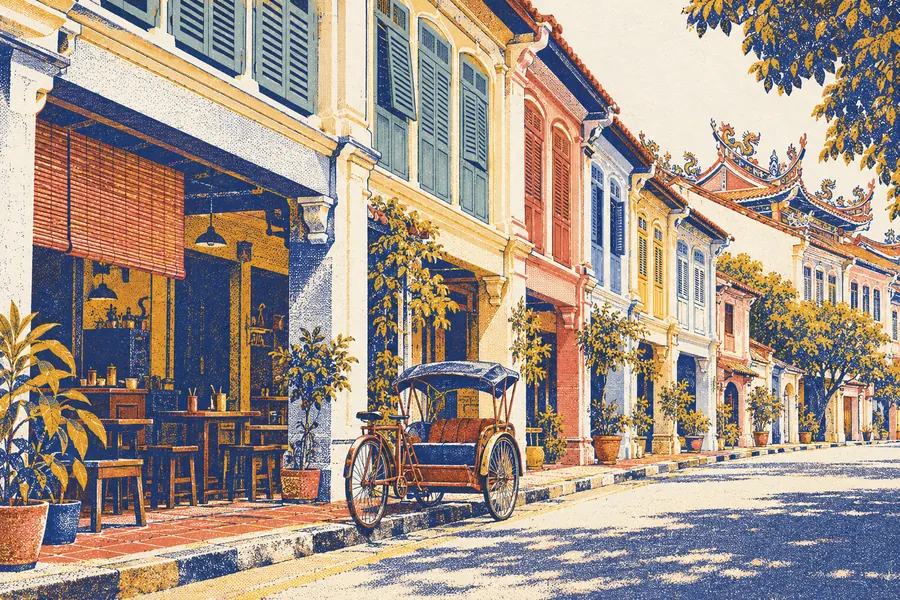
        Illustration of a George Town street of pastel heritage shophouses with a trishaw parked outside a café.

        George Town, on Penang Island, is recognised for its historic urban landscape and multicultural heritage. Its streets, buildings, food traditions, and cultural institutions reflect layers of historical exchange and community life.

        A visitor may explore architecture, museums, local food, and neighbourhood histories. However, historic urban areas are also living places where people work, study, worship, and reside.

        Responsible tourism therefore involves more than protecting buildings. Visitors should respect residents’ privacy, follow photography rules, and recognise that neighbourhoods are homes rather than simply tourist attractions.

        A suitable introduction might say:

        George Town offers visitors a chance to explore Penang’s historic architecture, food traditions, and multicultural heritage. As you walk through its neighbourhoods, take time to learn about local history while respecting residents and their everyday activities.
        Your guideIntroducing George Town

        2.5Comparing cultural heritage destinations

        The three destinations illustrate different ways of experiencing cultural heritage.

        Borobudur

        Main focus
        Buddhist monument
        Possible learning experience
        Architecture and religious significance
        Responsible visitor practice
        Respect religious significance and site rules

        Angkor

        Main focus
        Archaeological and architectural heritage
        Possible learning experience
        Khmer history and monumental architecture
        Responsible visitor practice
        Follow conservation guidelines

        George Town

        Main focus
        Historic urban landscape
        Possible learning experience
        Urban history and multicultural heritage
        Responsible visitor practice
        Respect residents and local activities
        These comparisons should not be interpreted as rankings. Each destination has its own history, context, and conservation needs.
        Critical thinking question

        How can tourism professionals make heritage interesting to visitors without oversimplifying its historical or cultural meaning?

        E · Learning material · Topic 3

        Exploring natural and community-based destinations

        40 minutes

        3.1Nature-based tourism

        Nature-based tourism involves visiting natural environments for recreation, learning, observation, and appreciation.

        ASEAN includes diverse ecosystems, such as tropical rainforests, wetlands, mountain environments, mangroves, coral reefs, and coastal landscapes.

        Nature-based tourism can support
        Conservation awarenessLocal livelihoods
        However, poorly managed activities can contribute to
        PollutionWildlife disturbanceHabitat lossPressure on local resources

        Tourism communication should therefore explain both the attraction and the responsibilities associated with visiting it.

        3.2Case study D: Ha Long Bay, Viet Nam

        Illustration of limestone islands in Ha Long Bay.

        Ha Long Bay is widely known for its limestone formations and coastal scenery. Its landscape provides opportunities for sightseeing and learning about geological processes and coastal environments.

        Tourism activities may include boat excursions and visits to selected sites, subject to local rules and operating conditions.

        A responsible tourism description should encourage visitors to avoid littering, follow safety instructions, and respect environmental protection requirements.

        Sample destination introduction:

        Ha Long Bay is known for its striking limestone formations rising from coastal waters. Visitors can appreciate its distinctive landscape and learn about the natural environment through organised excursions. To help protect the area, please follow local regulations, avoid littering, and respect designated visitor zones.
        Your guideIntroducing Ha Long Bay

        3.3Case study E: Komodo National Park, Indonesia

        Illustration of a ranger watching a Komodo dragon on a dry hillside above island bays.

        Komodo National Park is known for its natural landscapes, marine environments, and Komodo dragons.

        The area offers opportunities to learn about wildlife, biodiversity, and conservation. Visitors must recognise that encounters with wildlife require appropriate guidance and compliance with park regulations.

        A responsible tourism introduction might say:

        Komodo National Park offers opportunities to discover distinctive island landscapes, marine ecosystems, and the habitat of Komodo dragons. Wildlife encounters should always follow official park guidance. Please maintain appropriate distances, follow your guide’s instructions, and avoid disturbing animals or their habitats.
        Your guideIntroducing Komodo National Park

        This example illustrates how tourism English can communicate both attraction and responsibility.

        3.4Case study F: Community-based tourism in Southeast Asia

        Illustration of a community member demonstrating weaving to visitors in a village surrounded by rice fields.

        Community-based tourism involves local communities in the planning, management, or delivery of tourism experiences. Activities may include local food preparation, craft demonstrations, agricultural experiences, nature interpretation, and cultural storytelling.

        The term should not be used simply because tourists visit a village. Meaningful community-based tourism involves participation and attention to how benefits and responsibilities are distributed.

        Consider a village that welcomes visitors to learn about local craft production.

        A tourism professional could introduce the experience as follows:

        Today, you will learn about a local craft tradition and the skills involved in producing handmade items. Your visit provides an opportunity to hear directly from community members about their work and its significance. Please ask permission before taking photographs and follow the artisans’ instructions during the demonstration.
        Your guideIntroducing a village craft visit
        Key idea

        This approach recognises local people as knowledge holders rather than simply as attractions.

        3.5Tourism and sustainability

        A destination’s popularity does not automatically indicate successful tourism development.

        Sustainable destination management considers:

        Environmental protection

        Reducing pollution and protecting ecosystems.

        Cultural respect

        Recognising local traditions, beliefs, and heritage.

        Economic participation

        Creating fair opportunities for local businesses and workers.

        Visitor management

        Balancing tourism activities with the needs of communities and conservation.

        Responsible communication

        Providing accurate information and appropriate guidance.

        These principles can be incorporated into English-language destination profiles, brochures, guided tours, and promotional videos.

        Reflection

        Select one natural destination you know. Identify one potential environmental pressure and propose two ways tourism professionals could encourage responsible visitor behaviour.

        E · Learning material · Topic 4

        Describing ASEAN destinations in English

        35 minutes

        This topic develops the language needed to describe places, explain their significance, recommend activities, and communicate responsible travel advice.

        4.1Describing location and geographical features

        Useful expressions
        • The destination is located in
        • It is situated in the northern / southern / eastern / western part of
        • The area is known for
        • The landscape features
        • The site is surrounded by
        • The destination is accessible by
        Examples
        Luang Prabang is located in northern Lao PDR.
        Ha Long Bay is known for its limestone formations and coastal scenery.
        Komodo National Park includes island landscapes and marine environments.
        Use geographical terms accurately. If you are unsure about a location or travel route, check a reliable source before including it in promotional material.

        4.2Describing cultural and historical significance

        Useful expressions
        • The site is historically significant because
        • The destination reflects
        • Visitors can learn about
        • The area is recognised for
        • The tradition is associated with
        • The site provides insights into
        Examples
        Borobudur provides insights into Buddhist art and architecture.
        George Town’s historic urban landscape reflects layers of cultural and historical exchange.
        Angkor offers opportunities to explore the architectural heritage of the Khmer Empire.
        Avoid making claims that go beyond the available evidence. A tourism description should distinguish established facts from interpretation or opinion.

        4.3Recommending activities

        Useful expressions
        • Visitors can explore
        • You may wish to visit
        • If you are interested in , consider
        • The destination offers opportunities to
        • A guided tour can help visitors understand
        Examples
        If you are interested in architectural heritage, consider joining a guided tour.
        Visitors can explore the area’s natural landscape through activities permitted by local authorities.
        A visit to the local market may provide insights into regional food traditions.
        Recommendations should be appropriate to the destination and the visitor’s interests. Avoid implying that every visitor will have the same experience.

        4.4Giving responsible tourism advice

        Useful expressions
        • Please respect local customs and regulations.
        • Visitors are encouraged to
        • Please ask permission before
        • To help protect the environment,
        • Please follow your guide’s instructions.
        • Consider supporting locally owned businesses.
        Examples
        Please ask permission before photographing residents.
        To help protect the ecosystem, please avoid disturbing wildlife.
        Visitors are encouraged to purchase locally made products where possible.

        These expressions allow tourism professionals to communicate expectations politely and clearly.

        4.5Building a complete destination paragraph

        A well-organised destination description can follow five steps. Tap a step to see where it appears in the model paragraph.

        Model paragraph
        George Town is a historic city on Penang Island, Malaysia.1 It is known for its historic urban landscape, distinctive architecture, and multicultural heritage.2 Visitors can explore museums, historic streets, and local food traditions while learning about the city’s history.3 A guided walking tour can provide additional context about its buildings and neighbourhoods.4 When visiting, please respect residents’ privacy, follow photography rules, and support local businesses responsibly.5

        Notice how the paragraph moves from location to distinctive features, significance, visitor experience, and responsible behaviour.

        F · Guided learning activity

        Choose the right destination

        Information desk
        Illustration of three travellers in a guesthouse lounge studying postcards on a cork board, showing a temple, wildlife and a street-food stall.

        Imagine that you are working for a tourism information centre serving visitors interested in ASEAN.

        Three visitors request different experiences. Select one suitable destination for each visitor from the examples in this unit.

        For each selection, write two or three sentences explaining

        1. Why the destination suits the visitor’s interests.
        2. What the visitor could learn or experience.
        3. One responsible tourism recommendation.
        There may be several appropriate answers. Your recommendations should be supported by accurate information rather than assumptions about the visitor’s nationality or cultural background.
        Visitor AI am interested in historic buildings and archaeological sites.
        Visitor BI would like to learn about nature and wildlife.
        Visitor CI want to explore local food and multicultural neighbourhoods.
        G · Interactive learning activities

        Practise what you learned

        Activity 1Match

        Match the destination to its tourism focus

        Match each destination with the most appropriate description.

        Activity 2Complete

        Complete the destination description

        Complete each sentence with an appropriate word or phrase.

          Activity 3Rewrite

          Improve the tourism message

          Read the following description:

          Needs improvementThis village is primitive, and its people live in the old-fashioned way. Tourists can take photographs of everyone and buy traditional products.

          Rewrite it in 60–80 words to make it more respectful and responsible. Your revised description should:

          Activity 4Compare

          Destination comparison

          Choose two ASEAN destinations and complete the table.

          Comparison dimension
          Country
          Main tourism features
          Cultural or environmental significance
          Recommended visitor activity
          Responsible tourism message

          Write a short comparison of 100–120 words using expressions such as “both destinations”, “in contrast”, “whereas”, and “similarly”.

          Tap to add:
          H · Knowledge check

          Check your understanding

          Choose the best answer for each question. Score at least 6 out of 8 to pass. If you score below 6, revisit the relevant topics and try again.

          I · Individual assignment

          Create an ASEAN destination profile

          This assignment contributes to your final ASEAN Tourism Storytelling Project.

          Select one destination in an ASEAN member state. You may choose a destination from this unit or identify another destination using reliable sources.

          Prepare an English-language destination profile for visitors who want to learn about ASEAN’s cultural and geographical diversity.

          Your profile should include

          Length250–300 words
          LanguageEnglish
          FormatWritten destination profile

          A written destination profile with an optional photograph, map, or other appropriately credited visual.

          Assessment rubric

          Accuracy and use of credible sources20
          Description of destination features and significance20
          Connection to ASEAN diversity20
          Quality and appropriateness of English20
          Responsible tourism recommendations15
          Organisation and source acknowledgement5
          Total100
          Assessment guidance

          A strong submission should provide more than a list of attractions. It should explain why the destination matters, use clear and accurate English, and show an understanding of local context.

          Avoid

          Learners should avoid unsupported claims, stereotypes, and promotional language that misrepresents communities or environmental conditions.

          Where you started

          Your pre-learning paragraph from Section D. Compare it with your profile and notice how your tourism communication skills have developed.

          Saved on this device
          Sources · at least two credible sources
          Retain your destination profile. You will be able to adapt it into a tourism story, brochure, or digital presentation in Unit 6. Your draft also appears in your passport.
          J · Self-reflection

          Before you move to Unit 3

          Complete the following statements.

          Self-assessment checklist

          If you cannot yet check an item, revisit the relevant section before proceeding.

          K · Unit summary

          What you explored

          This unit introduced the diversity of ASEAN tourism destinations through cultural heritage, natural environments, urban experiences, and community-based tourism.

          You explored selected destinations in Indonesia, Cambodia, Malaysia, Viet Nam, and other ASEAN member states. You learned that destinations are not merely attractions: they are connected to histories, cultural practices, environmental systems, and the lives of local communities.

          You also practised describing destinations in English, explaining their significance, recommending visitor activities, and communicating responsible tourism messages.

          The central message of this unit

          Effective destination promotion combines accurate information, engaging English communication, cultural respect, and responsibility towards local communities and the environment.

          In Unit 3, you will build on these skills by learning how English functions in practical tourism communication, including welcoming visitors, giving directions, providing information, and responding to enquiries.

          Next · Unit 3

          English for Tourism Communication

          Using English to welcome visitors, provide tourism information, give directions, and respond to enquiries.

          Start Unit 3
          Unit 03 · About 4 hours · Self-paced online learning

          English for Tourism Communication

          Using English to welcome visitors, provide tourism information, give directions, and respond to enquiries in ASEAN contexts.

          Guiding questionHow can tourism professionals use English to provide clear, helpful, culturally respectful, and responsible services to visitors in ASEAN?

          Illustration of a tourism officer at a wooden counter in a heritage information centre, pointing to a map for a visitor with a backpack.
          Unit 3Overview
          A · Unit overview

          Welcome to Unit 3

          English plays an important role in many tourism settings, including hotels, airports, tourist information centres, heritage sites, restaurants, and guided tours. Tourism professionals frequently communicate with visitors who have different first languages, cultural backgrounds, expectations, and levels of English proficiency.

          In ASEAN, English can facilitate communication between visitors and tourism professionals from different countries. However, effective tourism communication requires more than knowing tourism vocabulary or producing grammatically correct sentences. It also involves listening carefully, explaining information clearly, choosing appropriate expressions, checking understanding, and responding respectfully to individual needs.

          In this unit, you will develop practical English communication skills for common tourism situations. You will learn how to welcome visitors, introduce destinations, describe attractions, give directions, provide recommendations, handle enquiries, and offer polite advice about responsible tourism.

          The examples are situated in ASEAN destinations and tourism contexts. You will also explore how communication can help visitors understand local heritage, cultural practices, and visitor responsibilities.

          You will apply these skills through dialogues, role-play activities, and a simulated tourism communication task.

          BLearning outcomes

          After completing this unit, you will be able to:

          1. Identify common communication functions used in tourism settings.
          2. Use appropriate English expressions to welcome visitors and introduce tourism destinations.
          3. Give directions, recommendations, and practical information using clear and polite language.
          4. Respond appropriately to common visitor enquiries and communication difficulties.
          5. Demonstrate effective English communication in a simulated ASEAN tourism situation.
          D · Pre-learning activity

          What would you say?

          15 minutes

          Imagine that you are working at a tourist information centre in Yogyakarta. A visitor approaches you and asks:

          1. Visitor

            Good morning. I’m visiting Borobudur tomorrow. Could you tell me a little about the site and what I should know before visiting?

          Pre-learningRespond

          Your reply to the visitor

          Before reading the learning materials, write a response of approximately 50–80 words.

          Consider these questions:

          1. How would you welcome the visitor?
          2. What information would you provide?
          3. What practical advice might be useful?
          4. How would you check whether the visitor needs further assistance?
          Save your response. You will revisit it after completing the unit to evaluate how your communication skills have developed.
          E · Learning material · Topic 1

          Welcoming visitors and introducing destinations

          35 minutes

          1.1Why communication matters in tourism

          Tourism communication helps visitors obtain information, make decisions, understand unfamiliar environments, and participate in activities safely and respectfully.

          A tourism professional may need to perform several communication functions during a single interaction:

          1. Welcome a visitor.
          2. Identify the visitor’s needs.
          3. Provide accurate information.
          4. Explain available services.
          5. Recommend suitable activities.
          6. Give instructions or advice.
          7. Respond to questions.
          8. Check understanding and offer further assistance.

          These functions are connected. A welcoming greeting establishes a positive interaction, while clear information and appropriate responses help visitors make informed decisions.

          Key idea

          Effective communication does not mean using complicated English. In many tourism contexts, short sentences, familiar vocabulary, and a logical sequence of information are more helpful than lengthy explanations.

          1.2Welcoming visitors

          A greeting establishes the tone of a tourism interaction.

          Common expressions include:

          Greeting a visitorGood morning. Welcome to Yogyakarta!
          Offering assistanceHow may I help you today?
          Welcoming a groupGood morning, everyone. Thank you for joining this tour.
          Responding to a visitorGood morning. How can I assist you?
          Beginning a guided tourWelcome, everyone. Before we begin, let me explain today’s itinerary.
          Ending an interactionThank you for visiting. I hope you enjoy the rest of your stay.

          The appropriate greeting depends on the situation. A formal hotel interaction may require different language from an informal conversation at a community tourism activity.

          1.3Introducing a tourism destination

          A destination introduction should provide visitors with essential information without overwhelming them.

          A useful introduction normally includes:

          1. The destination’s name and location.
          2. Its distinctive features.
          3. Its historical, cultural, or environmental significance.
          4. Activities or experiences available to visitors.
          5. Relevant visitor guidance.
          Example: Introducing Borobudur
          Welcome to Borobudur, a major Buddhist monument in Central Java, Indonesia. The site is known for its distinctive architecture and sculptural reliefs, which offer insights into Buddhist traditions and historical artistic practices. During your visit, you can learn about the monument’s history and cultural significance. Please follow the current visitor guidelines to help protect the site.
          Tourism officerIntroducing Borobudur

          Notice how the introduction combines factual information with an explanation of significance and a responsible tourism message.

          1.4Introducing a destination without stereotyping

          Tourism professionals sometimes describe destinations using generalisations that oversimplify local cultures.

          For example:

          Less appropriateEveryone in this village follows the same traditions.
          More appropriateThis community maintains several local traditions. Practices may vary among families and individuals, and local residents can explain their significance.

          The second statement recognises cultural practices without suggesting that every person shares identical beliefs or experiences.

          When explaining an unfamiliar cultural practice, use accurate information and acknowledge the perspectives of local communities.

          1.5A model dialogue: At a tourist information centre

          Model dialogueAt a tourist information centre
          1. Visitor

            Good morning. I’m visiting George Town for the first time. Could you recommend something interesting to do?

          2. Tourism officer

            Good morning! Welcome to George Town. Are you particularly interested in history, architecture, food, or local culture?

          3. Visitor

            I enjoy history and architecture.

          4. Tourism officer

            In that case, you might enjoy exploring the historic streets and visiting a local museum. A guided walking tour could also help you understand the city’s history and multicultural heritage.

          5. Visitor

            That sounds interesting. How long does the walking tour take?

          6. Tourism officer

            The duration depends on the tour you choose. I can help you check the current options and schedules.

          7. Visitor

            Thank you.

          8. Tourism officer

            You’re welcome. Please let me know if you need any further information.

          Communication analysis

          The tourism officer does five things. Tap one to see where it happens.

          Key principle

          Good tourism communication is visitor-centred. It responds to the individual’s needs rather than assuming that every visitor wants the same experience.

          E · Learning material · Topic 2

          Giving directions and recommendations

          40 minutes

          2.1Giving clear directions

          Visitors often need directions to attractions, transport facilities, restaurants, ticket offices, accommodation, and other services.

          Directions should be clear, logically sequenced, and appropriate to the visitor’s starting point.

          Useful expressions include:

          Go straight ahead.
          Turn left at the next junction.
          Turn right after the main entrance.
          Continue until you reach the information centre.
          The entrance is on your left.
          The bus stop is opposite the main gate.
          You can find the ticket office next to the visitor centre.
          Let me show you on the map.
          Directions should be based on verified local information. If you are uncertain about a route, check the map or ask an appropriate colleague instead of guessing.

          2.2Sequencing directions

          When giving directions, use sequence markers to help the visitor follow the route.

          Examples include:

          First …Then …Next …After that …Finally …
          Example
          1. First, leave the visitor centre and turn left.
          2. Then continue straight ahead until you reach the main junction.
          3. Next, turn right and follow the signs to the entrance.
          4. Finally, check the visitor information board for the latest site guidance.

          This example illustrates language organisation. Actual directions must be adapted to the destination and verified before being given to visitors.

          2.3Clarifying a visitor’s location

          Before providing directions, identify where the visitor is and where they want to go.

          Useful questions include:

          Where would you like to go?
          Are you looking for the main entrance?
          Are you currently near the information centre?
          Would you like me to show you on the map?
          Are you travelling on foot or by public transport?

          These questions prevent misunderstandings and help you provide relevant information.

          2.4Giving recommendations

          Recommendations should reflect the visitor’s interests, available time, accessibility needs, budget, and other relevant preferences.

          Useful expressions include
          • If you enjoy history, you might like
          • I would recommend visiting
          • You may wish to consider
          • For visitors interested in local food, may be a good option.
          • If you have limited time, you could prioritise
          • Would you prefer a guided tour or to explore independently?

          Compare the following examples.

          Less appropriateYou must visit this attraction. Everyone loves it.
          More appropriateIf you are interested in local history, you might enjoy this attraction.

          The second recommendation acknowledges that visitors have different preferences.

          2.5Providing practical visitor information

          Visitors may ask about opening hours, admission fees, transport, facilities, accessibility, weather, clothing, and local regulations.

          Useful expressions include:

          Let me check the latest information for you.
          The current admission fee is listed on the official website.
          Please check the official schedule before travelling.
          Accessibility arrangements may vary across the site.
          You can find the latest information on the official visitor information page.
          I would recommend confirming the details before your visit.
          Do not invent
          PricesSchedulesTransport timesSafety requirementsAccessibility arrangements

          Tourism information can change, and visitors need reliable information to make decisions.

          2.6Practice dialogue: Giving directions

          Practice dialogueGiving directions
          1. Visitor

            Excuse me. Could you tell me how to get to the tourist information centre?

          2. Tourism officer

            Certainly. Where are you standing at the moment?

          3. Visitor

            I’m near the main entrance.

          4. Tourism officer

            Thank you. Please check the information signs near the entrance. The centre’s location is marked on the visitor map. I can show you the route if you would like.

          5. Visitor

            Yes, please. That would be helpful.

          6. Tourism officer

            Of course. Here is the map. You can follow the marked route to the centre.

          7. Visitor

            Thank you for your help.

          8. Tourism officer

            You’re welcome. Have a pleasant visit!

          This dialogue illustrates a useful communication strategy:

          1 · Ask

          Ask for context.

          2 · Check

          Consult reliable information.

          3 · Help

          Provide assistance in a way that is easy to follow.

          E · Learning material · Topic 3

          Handling enquiries and communication difficulties

          40 minutes

          3.1Understanding visitor enquiries

          Visitors may ask questions about a destination’s history, available activities, cultural practices, transport, food, prices, or facilities.

          A tourism professional should listen carefully and identify the information the visitor needs.

          Useful expressions include:

          Could you tell me a little more about what you are looking for?
          Are you interested in the history of the site or its architecture?
          Let me make sure I understand your question.
          Are you asking about the admission fee or the guided tour?
          Would you like information about other nearby attractions?

          Asking a clarifying question is often more effective than providing a long answer that does not address the visitor’s actual concern.

          3.2Asking for repetition and clarification

          Communication difficulties may occur because of background noise, unfamiliar accents, unfamiliar vocabulary, or differences in English proficiency.

          It is appropriate to ask for clarification politely.

          Useful expressions include:

          Could you please repeat that?
          Would you mind speaking a little more slowly?
          Could you explain what you mean by that?
          Let me check that I have understood correctly.
          Do you mean the main entrance or the ticket office?
          These expressions support mutual understanding and should not be treated as signs of failure.

          3.3Explaining information simply

          When a visitor does not understand an explanation, try using simpler language, shorter sentences, examples, gestures where appropriate, or visual information.

          For example:

          More difficultThe monument’s architectural arrangement reflects complex historical and religious traditions.
          SimplerThe monument’s design tells us about the religious beliefs and artistic traditions of the people who built it.

          The simpler version retains the main idea while making it easier to understand.

          The goal is not to remove important information but to communicate it in a way that suits the audience.

          3.4Handling complaints professionally

          Visitors may experience difficulties involving booking arrangements, delays, facilities, service quality, or misunderstandings.

          A professional response should acknowledge the concern, clarify the situation, and explain what assistance is available.

          A useful four-step approach is:

          Step 1 · Listen

          Allow the visitor to explain the problem.

          Step 2 · Acknowledge

          Show that you have understood the concern.

          Step 3 · Clarify and respond

          Ask questions if necessary and explain the available options.

          Step 4 · Follow up

          Refer the matter to the appropriate staff member or confirm the next step.

          Useful expressions include:

          I’m sorry to hear that.
          Thank you for bringing this to our attention.
          Could you explain what happened?
          Let me check what options are available.
          I will contact the appropriate staff member for assistance.
          Thank you for your patience.
          Avoid making promises that you cannot fulfil or blaming the visitor before understanding the situation.

          3.5Practice dialogue: Responding to a complaint

          Practice dialogueResponding to a complaint
          1. Visitor

            Excuse me. I booked a guided tour, but I cannot find my name on the list.

          2. Tourism officer

            I’m sorry for the inconvenience. Could I check your booking confirmation, please?

          3. Visitor

            Certainly. Here it is.

          4. Tourism officer

            Thank you. Let me check the booking details with our tour coordinator.

          5. Visitor

            Does that mean I cannot join the tour?

          6. Tourism officer

            I cannot confirm that yet, but I will check the available options and explain them to you as soon as possible.

          7. Visitor

            Thank you for helping me.

          8. Tourism officer

            You’re welcome. Thank you for your patience.

          The officer does not immediately blame the visitor or guarantee a solution. Instead, the officer acknowledges the concern and explains the next step.

          3.6When you do not know the answer

          Tourism professionals cannot know every detail about every destination. Providing inaccurate information can create inconvenience or safety risks.

          If you do not know an answer, be transparent and explain how you will find the information.

          Useful expressions include:

          I’m not certain about that, but I can check for you.
          Let me confirm the information with our visitor services team.
          I would prefer to verify the details before advising you.
          Please allow me a moment to check the official information.
          I can direct you to the appropriate information desk.

          This approach demonstrates professionalism and respect for the visitor.

          E · Learning material · Topic 4

          Communicating politely and responsibly

          30 minutes

          4.1Politeness in tourism communication

          Politeness helps tourism professionals communicate requests, instructions, recommendations, and refusals appropriately.

          Compare these expressions:

          Direct expression
          More polite alternative
          “Move to the left.”
          “Could you please move to the left?”
          “Give me your ticket.”
          “May I see your ticket, please?”
          “Don’t touch that.”
          “Please do not touch the object, as it is part of the protected heritage collection.”
          “You are wrong.”
          “I understand your point. May I clarify one detail?”
          “Wait.”
          “Could you please wait a moment while I check that for you?”
          Direct language is not always inappropriate. In emergencies or situations involving immediate danger, instructions may need to be short and explicit. In ordinary service encounters, however, polite expressions can improve the interaction.

          4.2Using modal verbs

          Modal verbs help express requests, recommendations, permissions, and obligations.

          Could

          Could is commonly used for polite requests.

          Could you please wait here for a moment?
          Would

          Would can be used to make requests sound courteous.

          Would you like me to show you the route on the map?
          May

          May can be used to ask for permission or offer assistance.

          May I help you with your luggage?
          Should

          Should can express advice or recommendations.

          You should check the official visitor guidance before travelling.
          Must

          Must can express a requirement when appropriate.

          Visitors must follow the site’s safety regulations.
          Use modal verbs carefully. A recommendation should not be presented as a legal requirement, and a legal or safety requirement should not be weakened when clarity is essential.

          4.3Explaining cultural and religious practices

          Tourism professionals may need to explain expectations concerning dress, photography, religious sites, food, or community events.

          A good explanation should state the relevant practice or rule, explain its significance when appropriate, and communicate the required behaviour respectfully.

          Example: Visiting a religious site
          Welcome to the temple. Before entering, please check the site’s dress requirements and visitor guidelines. Some areas may have additional restrictions because of their religious significance. If you are unsure about any requirement, our staff will be happy to assist you.
          Tourism officerAt a temple entrance

          This explanation avoids generalising about all religious sites. It directs visitors to the rules that apply to the specific location.

          4.4Promoting responsible visitor behaviour

          Tourism communication can help visitors understand how to minimise negative impacts.

          Examples include:

          Visitor noticePlease place your rubbish in the designated bins.
          Visitor noticePlease remain on marked trails to protect the surrounding environment.
          Visitor noticePlease ask permission before photographing residents.
          Visitor noticePlease follow the guide’s instructions when observing wildlife.
          Visitor noticePlease respect restricted areas and local regulations.
          Visitor noticeConsider supporting local businesses and community-led activities.

          Responsible tourism messages should be accurate, practical, and appropriate to the setting.

          4.5Communicating with visitors who have different needs

          Visitors may have different levels of English proficiency, mobility requirements, sensory needs, or preferences for receiving information.

          Tourism professionals should avoid making assumptions and should offer appropriate assistance.

          Useful expressions include:

          Would you prefer written directions or a map?
          Would you like me to repeat that more slowly?
          Is there anything I can do to make your visit more comfortable?
          Would you like information about accessible facilities?
          Please let me know if you need assistance.
          Any information about accessibility should be verified. Do not promise that a facility is accessible without checking the actual arrangements.
          F · Guided case study

          A visitor at Borobudur

          Case file
          Illustration of a staff member at an information desk near Borobudur explaining the visitor guidelines to a traveller, with the monument in the distance.

          Case: Helping a visitor plan a responsible visit

          You are working at a visitor information desk near Borobudur in Indonesia.

          A visitor asks three questions:

          The visitor asks
          1. Visitor

            Could you tell me why Borobudur is important?

          2. Visitor

            How can I find out about the current visitor arrangements?

          3. Visitor

            What should I know to make sure I respect the site?

          Case study questions

          1Which expressions make the response welcoming and polite?

          “Welcome to Borobudur” and “I recommend checking” contribute to a courteous interaction.

          2How does the response explain cultural significance?

          The response identifies the monument’s Buddhist significance, architecture, and sculptural reliefs.

          3Why does the speaker direct the visitor to official information?

          Current visitor arrangements may change, so official information should be consulted.

          4Which responsible tourism practices are included?

          Following site regulations and respecting cultural and religious significance are responsible practices.

          5How could the response be adapted for a visitor with limited English proficiency?

          The speaker could use shorter sentences, explain unfamiliar words, and offer a map or written information.

          Think about each question first, then open it to compare with the suggested answer.

          G · Interactive learning activities

          Practise what you learned

          Activity 1Choose

          Choose the most appropriate expression

          Choose the best response for each situation.

          Activity 2Complete

          Complete the dialogue

          Complete the following dialogue using appropriate expressions.

          1. Visitor

            Good afternoon. Could you recommend a place to learn about local history?

          2. Good afternoon! Certainly.

          3. Visitor

            I am particularly interested in architecture.

          4. In that case,

          5. Visitor

            How can I find out about the opening hours?

          6. Visitor

            Thank you for your help.

          Activity 3Rewrite

          Rewrite the instructions politely

          Rewrite each instruction to make it more appropriate for a tourism setting.

          Activity 4Speak

          Practise a tourism role-play

          Choose one of the following situations.

          Role-play requirements

          Your dialogue should include:

          Suggested duration2–3 minutes per role-play

          If you are studying independently, record yourself performing both roles. Listen to the recording and identify one strength and one area for improvement.

          H · Knowledge check

          Check your understanding

          Choose the best answer for each question. Score at least 6 out of 8 to pass. If you score below 6, revisit the relevant learning materials and attempt the questions again.

          I · Individual assignment

          Simulated ASEAN tourism interaction

          Prepare and perform a 3–4-minute English-language tourism interaction based on an ASEAN destination.

          You may use the destination profile you created in Unit 2.

          Your Unit 2 destination profile
          Unit 2 · ASEAN destination profile

          Choose one context

          Your performance should demonstrate that you can communicate clearly, respond to visitor needs, and provide responsible tourism advice.

          Required components

          Performance3–4 minutes
          Written dialogueAbout 350–450 words
          FormatWritten or recorded

          Submit a written dialogue or an audio/video recording of your performance. If you are studying independently, you may record both sides of the conversation. You can also ask a peer to perform the visitor role.

          Assessment rubric

          Accuracy and relevance of tourism information20
          Appropriate tourism vocabulary and English expressions20
          Clarity, fluency, and organisation20
          Politeness and responsiveness to visitor needs20
          Intercultural awareness and responsible tourism15
          Courteous closing and overall coherence5
          Total100

          Performance descriptors

          Excellent

          The interaction is clear, well organised, relevant, and appropriately polite. It demonstrates accurate tourism information, responsive communication, intercultural awareness, and responsible tourism guidance.

          Good

          The interaction is generally clear and relevant, with appropriate expressions and a suitable tourism message. Minor language or organisational problems do not prevent understanding.

          Developing

          The interaction communicates some relevant information but requires improvement in clarity, responsiveness, vocabulary, or cultural awareness.

          Beginning

          The interaction is incomplete or difficult to follow and needs further practice with basic tourism expressions and communication strategies.

          Saved on this device
          Option 2 · Record your performance
          Your written dialogue also appears in your passport.
          J · Self-reflection

          Before you move to Unit 4

          After completing the unit, revisit your pre-learning response.

          Where you started

          Compare your initial response with what you can produce now.

          Answer the following questions:

          Self-assessment checklist

          If you cannot yet check an item, revisit the corresponding section and repeat the relevant practice activity.

          K · Unit summary

          What you explored

          In this unit, you developed practical English communication skills for tourism contexts. You learned how to welcome visitors, introduce destinations, provide directions, make recommendations, answer enquiries, and respond to communication difficulties.

          You also explored how polite language, active listening, clarification strategies, and accurate information contribute to effective tourism services. In addition, you considered how tourism professionals can communicate cultural and religious practices respectfully and encourage responsible visitor behaviour.

          These skills are particularly relevant in ASEAN, where tourism professionals may interact with visitors from different linguistic and cultural backgrounds.

          The central message of this unit

          Effective tourism communication is not simply about speaking English. It is about helping visitors understand, make informed decisions, and interact respectfully with destinations and communities.

          In Unit 4, you will extend these skills by exploring intercultural communication, cultural sensitivity, and strategies for managing differences in expectations and communication styles.

          Next · Unit 4

          Intercultural Communication in ASEAN Tourism

          Communicating across cultures, respecting diversity, and managing intercultural interactions.

          Start Unit 4
          Unit 04 · About 4 hours · Self-paced online learning

          Intercultural Communication in ASEAN Tourism

          Communicating across cultures, respecting diversity, and managing intercultural interactions in ASEAN tourism.

          Guiding questionHow can tourism professionals communicate effectively and respectfully with people whose cultural experiences and expectations differ from their own?

          Illustration of a market stallholder pointing out the ingredients of a dish in small bowls to two visitors, one of whom gestures with a polite question.
          Unit 4Overview
          A · Unit overview

          Welcome to Unit 4

          Tourism brings people into contact with different languages, cultural practices, values, expectations, and ways of communicating. These encounters can create opportunities for learning and mutual understanding, but they can also lead to misunderstandings when people interpret unfamiliar behaviour through their own cultural expectations.

          ASEAN is a particularly relevant context for studying intercultural communication because its member states are home to diverse linguistic communities, religious traditions, historical experiences, and social practices. Visitors may encounter unfamiliar expectations concerning greetings, food, clothing, religious sites, photography, personal space, and interactions with local communities.

          English can provide a shared means of communication among people who speak different first languages. Nevertheless, speaking the same language does not guarantee that people will interpret messages in the same way. Effective intercultural communication also requires listening, curiosity, empathy, flexibility, and awareness of individual differences.

          In this unit, you will explore the concept of intercultural communication, examine common sources of misunderstanding in tourism, and practise strategies for responding respectfully to unfamiliar situations. You will also learn to distinguish cultural awareness from stereotyping and consider how tourism professionals can represent ASEAN’s diversity responsibly.

          BLearning outcomes

          After completing this unit, you will be able to:

          1. Explain the meaning and importance of intercultural communication in ASEAN tourism.
          2. Identify potential sources of intercultural misunderstanding in tourism encounters.
          3. Distinguish cultural awareness from stereotyping and overgeneralisation.
          4. Apply appropriate English expressions to clarify meaning, manage misunderstandings, and respond respectfully to cultural differences.
          5. Demonstrate intercultural communication strategies in a simulated tourism situation.
          D · Pre-learning activity

          When communication becomes difficult

          15 minutes

          Imagine that you are a tour guide at a cultural heritage site in ASEAN.

          A visitor asks whether they may take photographs inside a building. You explain that photography is restricted in certain areas. The visitor appears confused and responds,

          1. Visitor

            But I can take photographs at other tourist attractions. Why not here?

          Pre-learningReflect

          How would you respond?

          Before reading the unit, consider the following questions.

          1. Why might the visitor find the restriction confusing?
          2. How could you explain the rule without making the visitor feel embarrassed?
          3. What information would help the visitor understand the restriction?
          4. How could you respond if the visitor disagreed with the rule?

          Write a short response of approximately 80–100 words.

          There is no single correct answer. The aim is to reflect on how communication, expectations, and cultural context can influence tourism encounters.

          Save your response for comparison with your final assignment.
          E · Learning material · Topic 1

          Understanding intercultural communication

          35 minutes

          1.1What is culture?

          Culture refers to the shared and learned meanings, practices, knowledge, values, and ways of life through which people interpret and participate in social life.

          Culture can be expressed through language, food, clothing, music, celebrations, religious practices, communication styles, social relationships, and many other aspects of everyday experience.

          Visible
          Traditional clothingArchitectureFood
          Less immediately visible
          Expectations about politenessThe interpretation of silenceAttitudes towards timeWays of expressing disagreement
          Some cultural practices are visible, such as traditional clothing, architecture, or food. Others are less immediately visible, such as expectations about politeness, the interpretation of silence, attitudes towards time, or ways of expressing disagreement.

          Some cultural practices are visible, such as traditional clothing, architecture, or food. Others are less immediately visible, such as expectations about politeness, the interpretation of silence, attitudes towards time, or ways of expressing disagreement.

          However, culture should not be understood as a fixed set of rules that determines how every person behaves. People participate in multiple cultural communities and interpret traditions in different ways. Their experiences may be influenced by family, education, profession, age, personal preferences, migration, and exposure to other cultures.

          Key idea

          For this reason, cultural knowledge should guide respectful questions and careful observation rather than automatic assumptions.

          1.2What is intercultural communication?

          Intercultural communication occurs when people with different cultural experiences interact and negotiate meaning.

          In tourism, this may involve a tour guide explaining a local tradition to international visitors, a hotel receptionist responding to a guest’s request, or a visitor asking a community member about the significance of a cultural practice.

          Successful intercultural communication requires more than transferring information from one person to another. Participants need to interpret messages, recognise possible differences in expectations, and check whether they understand one another.

          For example,

          a visitor may interpret a brief response asunfriendly,
          while the tourism professional may intend it simply asan efficient answer.

          Neither interpretation should automatically be treated as the only correct one.

          Clarification can help both participants understand the interaction more accurately.

          1.3Why is intercultural communication important in ASEAN tourism?

          Intercultural communication supports several important aspects of tourism.

          Visitor satisfaction

          Clear and respectful communication helps visitors understand information and obtain appropriate assistance.

          Cultural learning

          Visitors can gain deeper insights into local histories, traditions, and community perspectives.

          Conflict prevention

          Clarifying expectations can reduce avoidable misunderstandings concerning visitor behaviour, services, and local regulations.

          Community respect

          Responsible communication recognises local residents as people with their own perspectives, preferences, and rights.

          Regional understanding

          Tourism encounters can encourage people to appreciate the diversity of ASEAN while recognising connections across the region.

          Professional effectiveness

          Tourism professionals who listen carefully and respond flexibly are better prepared to serve visitors with different needs.

          Key idea

          Intercultural competence does not mean knowing every cultural practice. It means recognising the limits of one’s knowledge and responding constructively when differences arise.

          1.4Three dimensions of intercultural competence

          For this module, intercultural competence can be understood through three interconnected dimensions.

          Consider a visitor who does not understand why certain clothing is expected at a religious site.

          01

          Knowledge

          Understanding that cultures are diverse and that communication is influenced by social and cultural contexts.

          At the religious siteKnowledge helps the tourism professional recognise that clothing expectations may be connected to local religious or cultural practices.

          02

          Attitudes

          Demonstrating curiosity, openness, respect, and willingness to reconsider initial assumptions.

          At the religious siteAttitudes encourage the professional to explain the expectation without judging the visitor.

          03

          Skills

          Listening actively, asking appropriate questions, clarifying meaning, adapting explanations, and resolving misunderstandings.

          At the religious siteSkills enable the professional to communicate the requirement clearly and offer practical assistance when available.

          All three dimensions contribute to effective intercultural communication.

          E · Learning material · Topic 2

          Cultural diversity and tourism encounters in ASEAN

          40 minutes

          2.1Understanding ASEAN’s cultural diversity

          ASEAN includes communities with diverse languages, religions, histories, artistic traditions, food practices, and social customs.

          For example, visitors may encounter Buddhist heritage at Borobudur in Indonesia, Khmer architectural heritage at Angkor in Cambodia, multicultural food traditions in Penang, or distinctive cultural and religious practices in other parts of the region.

          These examples demonstrate the diversity of tourism experiences available across ASEAN. They should not be interpreted as complete descriptions of the countries in which they are located.

          A country’s population is rarely culturally uniform. Practices can vary between regions, communities, generations, families, and individuals.

          Tourism professionals therefore need to balance cultural knowledge with sensitivity to individual differences.

          2.2Common areas of intercultural interaction

          Several aspects of tourism may involve different expectations. Choose an area to explore it.

          Greetings and forms of address

          People may use different greetings, titles, gestures, and levels of formality depending on the situation.

          A visitor may not be familiar with a local greeting, while a local tourism professional may be unsure how to address a visitor appropriately.

          A useful strategy is to begin with a polite, neutral greeting and follow the communication preferences expressed by the other person.

          Examples
          Good morning. Welcome to our destination.
          How would you prefer me to address you?
          Please let me know if you have any questions.

          Food and dietary preferences

          Food is an important part of many tourism experiences. Visitors may have dietary requirements connected to religion, health, personal preferences, ethics, or allergies.

          Tourism professionals should not assume that every visitor from a particular country follows the same diet.

          Useful expressions
          Do you have any dietary requirements?
          Would you like information about vegetarian options?
          Let me check the ingredients with the restaurant.
          I will confirm whether this dish meets your requirements.
          Food-related information should be verified, especially when allergies or religious dietary requirements are involved.

          Clothing and religious sites

          Some religious or heritage sites have specific requirements concerning clothing, footwear, head coverings, or access to particular areas.

          These expectations should be explained accurately and respectfully.

          For example
          Before entering the site, please check the visitor guidelines concerning appropriate clothing. Some areas have specific requirements because of their religious significance.
          Tourism officerAt a site entrance
          The exact advice must reflect the rules of the particular site rather than assumptions about all religious places.

          Photography and privacy

          Photography can raise questions about consent, privacy, and the cultural significance of certain places or activities.

          A visitor may assume that taking photographs is acceptable because cameras are permitted elsewhere. A local community may have different expectations concerning sacred ceremonies, private spaces, or images of individuals.

          Tourism professionals can explain the relevant rules and encourage visitors to seek permission when photographing people.

          Useful expressions
          Please check whether photography is permitted in this area.
          Would you mind asking permission before taking photographs of residents?
          Photography is restricted in this section of the site.
          Thank you for respecting the community’s privacy.

          Personal space and non-verbal communication

          People use gestures, facial expressions, eye contact, silence, and physical distance to communicate. The meaning of these behaviours can depend on context and individual preference.

          A gesture that is ordinary in one setting may be unfamiliar or inappropriate in another.

          Tourism professionals should avoid interpreting one gesture or behaviour as definitive evidence of someone’s attitude. When uncertain, they can rely on polite verbal communication and ask for clarification.

          2.3Language and intercultural communication

          English is widely used in international tourism, but visitors may have different levels of proficiency.

          Some may understand written information more easily than spoken explanations. Others may need additional time to process unfamiliar vocabulary or accents.

          Effective communication can be supported by:

          • Using familiar words and relatively short sentences.
          • Speaking clearly at a natural, manageable pace.
          • Avoiding unnecessary idioms and slang.
          • Explaining unfamiliar terms.
          • Using maps, signs, diagrams, or written information.
          • Checking understanding without embarrassing the visitor.

          For example, instead of saying:

          IdiomaticYou should make a beeline for the entrance and keep an eye out for the sign.
          A clearer instructionPlease go directly to the entrance and look for the information sign.

          The second version is easier for many international visitors to understand because it avoids idiomatic expressions.

          2.4Cultural awareness without stereotyping

          Definition

          A stereotype is an oversimplified belief about the characteristics or behaviour of members of a group.

          Stereotypes may be positive or negative, but both can lead to inaccurate expectations.

          Consider these statements:

          Statement AAll visitors from this country prefer group activities.
          Statement BSome visitors may enjoy group activities, while others may prefer independent experiences. It is best to ask about their preferences.

          Statement B is more appropriate because it recognises individual variation.

          Cultural awareness

          Involves learning about traditions and social contexts.

          Stereotyping

          Involves assuming that an individual must behave in a particular way because of their perceived group membership.

          The distinction is essential in tourism because respectful service depends on the needs of actual visitors, not generalisations about their nationality.

          2.5A practical principle: Observe, Ask, Adapt

          When you encounter an unfamiliar cultural situation, use the following three-step approach.

          1. Observe.

            Pay attention to the situation and the information available without immediately judging the behaviour.

          2. Ask.

            Use respectful questions when clarification is appropriate.

          3. Adapt.

            Adjust your explanation or response based on what you learn.

          For example, if a visitor appears uncertain about a local greeting, you do not need to assume that the visitor is being disrespectful. You can greet them politely and explain any relevant expectations when necessary.

          This approach supports communication without treating cultural differences as problems that must always be eliminated.

          E · Learning material · Topic 3

          Managing intercultural misunderstandings

          40 minutes

          3.1Why do misunderstandings happen?

          Intercultural misunderstandings can arise for several reasons.

          Language differences

          People may interpret words differently or misunderstand unfamiliar expressions.

          Different expectations

          Visitors and tourism professionals may have different assumptions about service, punctuality, personal space, or appropriate behaviour.

          Limited contextual knowledge

          A visitor may not understand why a particular rule exists at a religious site or heritage attraction.

          Non-verbal ambiguity

          Gestures, silence, facial expressions, or tone may be interpreted differently.

          Stereotypes and assumptions

          People may judge an interaction based on expectations about a cultural group rather than the actual circumstances.

          Incomplete information

          A misunderstanding may occur because the rules or instructions were not communicated clearly in the first place.

          Recognising these possibilities can help tourism professionals avoid attributing every difficulty to cultural differences. Sometimes the problem is simply unclear information, poor signage, or an inconsistent service.

          3.2A four-step strategy for resolving misunderstandings

          When an intercultural misunderstanding occurs, the following strategy can be useful.

          Step 1

          Listen and remain calm. Allow the visitor to explain their concern. Avoid interrupting or responding defensively.

          Step 2

          Acknowledge the concern. Show that you have heard the visitor, even if you do not agree with their interpretation.

          Step 3

          Clarify and explain. Explain the relevant information or ask a question to understand the source of the misunderstanding.

          Step 4

          Agree on the next step. Offer practical assistance, identify available options, or explain the applicable rule.

          This approach focuses on solving the communication problem rather than identifying someone to blame.

          3.3Case study A: Photography at a religious site

          Situation

          A visitor begins taking photographs in an area where photography is prohibited. A tourism officer asks the visitor to stop. The visitor responds:

          1. Visitor

            I don’t understand. Why can I take photographs outside but not here?

          Less effective responseBecause those are the rules. You should know better.

          This response may communicate the restriction, but it risks embarrassing the visitor and does not explain the reason for the rule.

          More effective responseI understand why that may seem confusing. Photography is restricted in this area because of the site’s specific requirements. You can check the visitor information for further details. Thank you for respecting the rule.
          Analysis · the second response
          • Acknowledges the visitor’s confusion.
          • Explains that a specific rule applies to the area.
          • Avoids blaming the visitor.
          • Encourages compliance with the rule.
          If the reason for the restriction is known and officially documented, the tourism officer can explain it more specifically. If not, the officer should avoid inventing a justification.

          3.4Case study B: A misunderstanding about food

          Situation

          A visitor at a tourism event asks whether a dish contains meat. The staff member replies, “No meat,” believing the dish is vegetarian. The visitor later discovers that it contains fish sauce.

          What went wrong?

          The staff member used an incomplete description of the ingredients. The misunderstanding may have resulted from an assumption about what “no meat” means to the visitor.

          A more effective response
          Let me check the ingredients with the kitchen team. The dish may contain ingredients other than meat, so I want to confirm whether it meets your dietary requirements.
          Staff memberAt a tourism event
          Learning point

          When food requirements matter, tourism professionals should verify ingredients rather than rely on assumptions or vague descriptions.

          3.5Case study C: A visitor misunderstands a tour guide

          Situation

          A tour guide says:

          What the guide saidWe’ll meet back here in half an hour.

          A visitor does not understand the expression “half an hour” and returns much later than expected.

          A clearer responseWe will meet at this location again in 30 minutes, at 11:30 a.m. Please wait beside the information desk.

          The exact time and location should be appropriate to the actual itinerary.

          Learning point

          Tourism professionals can reduce misunderstandings by using explicit times, clear locations, and simple instructions instead of relying on expressions that visitors may not understand.

          3.6Useful English expressions for intercultural situations

          Acknowledging confusionI understand why that may be confusing.
          Asking for clarificationCould you explain what you mean?
          Checking understandingLet me make sure I have understood correctly.
          Explaining a local ruleThis area has specific visitor requirements.
          Offering assistanceWould you like me to explain that in more detail?
          Avoiding assumptionsCould you tell me what you would prefer?
          Apologising for unclear informationI’m sorry that our instructions were unclear.
          Confirming a solutionWould this arrangement work for you?

          These expressions are useful across many tourism settings. Their appropriateness depends on the specific interaction, the visitor’s needs, and the rules that apply.

          E · Learning material · Topic 4

          Inclusive and respectful tourism communication

          30 minutes

          4.1What is inclusive communication?

          Inclusive communication aims to make information accessible, respectful, and relevant to people with different backgrounds, identities, preferences, and communication needs.

          In tourism, inclusion involves recognising that visitors and community members are individuals rather than representatives of a single cultural category.

          Tourism professionals should avoid assuming that every visitor:
          • Speaks English fluently.
          • Has the same dietary preferences as others from their country.
          • Has the same religious beliefs as other members of a community.
          • Has the same physical or sensory abilities.
          • Is comfortable with physical contact or particular forms of address.
          • Wants the same activities or experiences.

          Instead, professionals can ask appropriate questions and provide choices wherever possible.

          4.2Using respectful language

          Language can communicate respect or reinforce prejudice.

          Consider these examples.

          Less appropriateThose people have strange customs.
          More appropriateThis community has practices that may be unfamiliar to some visitors. Local explanations can help visitors understand their significance.
          Less appropriateForeigners never understand our rules.
          More appropriateVisitors may be unfamiliar with the site’s requirements, so clear explanations can help them follow the rules.
          Less appropriateThe elderly cannot walk around this site.
          More appropriateThe walking route may be challenging for some visitors. Let me explain the available accessibility information.

          The more appropriate expressions focus on context, information, and individual needs rather than making sweeping judgements.

          4.3Explaining cultural practices respectfully

          When introducing a cultural practice, tourism professionals should explain what is known about it without suggesting that every community member interprets it in the same way.

          A useful structure is:

          1. Identify the practice accurately.
          2. Explain its significance using reliable information.
          3. Recognise that practices and interpretations may vary.
          4. Explain any relevant visitor expectations.
          5. Invite questions where appropriate.
          For example
          This ceremony is an important cultural practice for the community. Its meaning and participation requirements should be understood in the local context. Visitors are welcome to learn more from authorised community representatives and should follow the guidance provided about photography and participation.
          Tourism officerIntroducing a ceremony

          This approach recognises the community’s authority to explain its own practices.

          4.4Respecting local communities

          Intercultural communication should not focus exclusively on helping international visitors. It should also consider the rights, perspectives, and wellbeing of the people who live in tourism destinations.

          Tourism professionals should encourage visitors to:

          • Respect residents’ privacy.
          • Ask permission before photographing people when appropriate.
          • Follow local rules and community guidance.
          • Avoid entering private or restricted spaces.
          • Treat local workers and community members courteously.
          • Recognise that cultural practices are meaningful to the people who maintain them.
          Tourism promotion should also avoid portraying communities as static or existing solely for visitors’ entertainment. Communities are living social environments that continue to change and develop.

          4.5Intercultural communication and ASEAN identity

          ASEAN brings together member states with distinct national identities and diverse cultural communities. Intercultural tourism encounters can help visitors appreciate these differences while discovering opportunities for regional understanding.

          Regional identity does not require cultural uniformity. People can recognise shared interests and connections while maintaining distinct languages, traditions, histories, and identities.

          English can facilitate these interactions, but the quality of communication depends on how it is used. Clear explanations, respectful questions, active listening, and willingness to learn can contribute to meaningful exchanges.

          The goal is not to make everyone communicate in the same way. It is to develop the ability to communicate across differences while respecting the people involved.

          F · Guided case study

          An intercultural encounter in ASEAN

          Case file
          Illustration of an artisan weaving baskets under a shaded pavilion, raising a hand and smiling as she explains something while visitors watch and one holds a phone.

          Case: Welcoming visitors to a community-based tourism programme

          You are assisting a community-based tourism programme in an ASEAN destination. Visitors have arrived to learn about local crafts and food traditions.

          During the visit, three situations occur.

          Your task

          For each situation, prepare a short English response that:

          1. Acknowledges the visitor’s question or concern.
          2. Explains the relevant issue without stereotyping.
          3. Offers a practical next step.
          4. Demonstrates respect for the community and the visitor.
          There may be several appropriate responses. The important considerations are factual accuracy, respect, clarity, and responsiveness to the people involved.
          Situation 1Photography

          A visitor begins photographing a craft demonstration. The artisan explains that some parts of the activity should not be photographed.

          Situation 2Food preferences

          Another visitor asks whether the meal contains ingredients that conflict with their dietary requirements. You do not have a complete ingredient list.

          Situation 3Cultural questions

          A visitor asks whether everyone in the community follows the same tradition.

          Discussion questions

          1. Why is it important to respect the artisan’s wishes about photography?
          2. Why should the tourism professional avoid guessing about food ingredients?
          3. How does the third response avoid stereotyping?
          4. What role does English play in these interactions?
          5. How could the tourism programme prepare staff to manage similar situations more effectively?
          G · Interactive learning activities

          Practise what you learned

          Activity 1Match

          Identify the intercultural issue

          Match each situation with the most relevant communication issue.

          Activity 2Choose

          Choose the most respectful response

          Choose the best response for each question.

          Activity 3Rewrite

          Rewrite the stereotype

          Rewrite each statement to make it more respectful and accurate.

          Activity 4Apply

          Practise the Observe–Ask–Adapt strategy

          Read the situation below.

          Situation

          A visitor remains silent after you explain the rules for entering a religious heritage site. You are unsure whether the visitor understands the instructions.

          Write one sentence for each step.

          H · Knowledge check

          Check your understanding

          Choose the best answer for each question. Score at least 6 out of 8 to pass. If you score below 6, revisit the relevant learning materials and attempt the questions again.

          I · Individual assignment

          Intercultural tourism communication scenario

          Prepare a 3–4-minute role-play or a written dialogue of approximately 350–450 words based on an intercultural situation in an ASEAN tourism context.

          Choose one of the following scenarios

          Required components

          Your role-play or dialogue should:

          Include a brief explanation of why your response demonstrates intercultural competence.

          Role-play3–4 minutes
          Written dialogueAbout 350–450 words
          PlusA 100-word explanation

          You may submit a written dialogue, an audio recording, or a video recording. If you are studying independently, you may perform both roles.

          Assessment rubric

          Understanding of the intercultural situation20
          Appropriate English expressions and clarity20
          Respectful and inclusive communication20
          Use of clarification and misunderstanding-management strategies20
          Avoidance of stereotypes and unsupported claims10
          Practical solution and overall coherence10
          Total100

          Performance descriptors

          Excellent

          The interaction demonstrates strong intercultural awareness, clear English, respectful listening, effective clarification, and a practical response to the situation.

          Good

          The interaction is generally clear and respectful, with appropriate communication strategies and a relevant solution.

          Developing

          The interaction addresses the situation but requires improvement in clarity, responsiveness, cultural sensitivity, or explanation.

          Beginning

          The interaction is incomplete or relies on unsupported assumptions and needs further practice with intercultural communication strategies.

          Where you started

          Your pre-learning response from Section D, saved for comparison with this assignment.

          Saved on this device
          Option 2 · Record your role-play
          Your written dialogue also appears in your passport.
          J · Self-reflection

          Before you move to Unit 5

          Reflect on your learning by completing the following statements.

          Self-assessment checklist

          If you cannot yet check an item, revisit the relevant section and repeat the associated activity.

          K · Unit summary

          What you explored

          In this unit, you explored intercultural communication and its importance in ASEAN tourism. You examined how differences in language, expectations, cultural knowledge, and communication styles can influence interactions between visitors and tourism professionals.

          You learned to distinguish cultural awareness from stereotyping and explored how the Observe–Ask–Adapt strategy can support respectful communication. You also practised strategies for clarifying meaning, managing misunderstandings, responding to dietary questions, explaining visitor requirements, and respecting local communities.

          Intercultural competence does not require knowing everything about every culture. Instead, it requires curiosity, humility, accurate information, active listening, and a willingness to adjust your communication when necessary.

          The central message of this unit

          Effective intercultural communication means recognising differences without making assumptions, listening before judging, and treating visitors and local communities with respect.

          In Unit 5, you will explore sustainable tourism in ASEAN, including how tourism professionals can communicate environmental responsibility, support local communities, and promote tourism practices that protect cultural and natural heritage.

          Next · Unit 5

          Sustainable Tourism in ASEAN

          Environmental responsibility, heritage protection, community participation, and sustainability communication.

          Start Unit 5
          Unit 05 · About 4 hours · Self-paced online learning

          Sustainable Tourism in ASEAN

          Environmental responsibility, cultural heritage protection, community participation, and sustainable tourism communication.

          Guiding questionHow can tourism in ASEAN create meaningful visitor experiences while protecting the environment, respecting cultural heritage, and supporting local communities?

          Illustration of a guide pointing out a heron to three visitors on a boardwalk through mangroves, with a water refill station and sorting bins beside the path and coral visible in the clear water below.
          Unit 5Overview
          A · Unit overview

          Welcome to Unit 5

          Tourism can create economic opportunities, support cultural exchange, and help people appreciate natural and cultural heritage. However, tourism can also contribute to environmental degradation, overcrowding, pressure on local resources, and unequal distribution of economic benefits.

          These opportunities and challenges are relevant across ASEAN, a region characterised by diverse ecosystems, historic sites, living cultural traditions, and local communities with different tourism priorities.

          Sustainable tourism seeks to consider the environmental, economic, and sociocultural impacts of tourism while addressing the needs of visitors, tourism businesses, host communities, and future generations. It requires more than encouraging visitors to behave responsibly. It also involves planning, resource management, community participation, appropriate policies, and accountability.

          In this unit, you will explore sustainable tourism in ASEAN, examine practical examples of responsible tourism, and learn how tourism professionals can communicate sustainability messages in English. You will also consider how tourism promotion can support local communities without misrepresenting their cultures or making unsupported environmental claims.

          Throughout the unit, you will develop recommendations for a more sustainable tourism experience at an ASEAN destination. Your work will contribute to the final ASEAN Tourism Storytelling Project.

          BLearning outcomes

          After completing this unit, you will be able to:

          1. Explain the meaning and importance of sustainable tourism in ASEAN.
          2. Identify environmental, economic, and sociocultural issues associated with tourism.
          3. Evaluate tourism practices according to their potential benefits and impacts.
          4. Use appropriate English expressions to communicate responsible tourism advice.
          5. Develop a destination-specific message or recommendation that supports sustainable tourism.
          D · Pre-learning activity

          Is tourism always beneficial?

          15 minutes
          A small coastal destination

          Imagine that a small coastal destination in Southeast Asia has become increasingly popular with international visitors.

          Local businesses report higher sales, and more residents have found work in tourism. However, the destination is also experiencing more litter, increased demand for water, and pressure on marine habitats. Some residents are concerned that tourism development is changing their neighbourhood.

          Pre-learningReflect

          Before studying the unit

          Before studying the unit, answer the following questions.

          1. What benefits might tourism bring to this destination?
          2. What problems might emerge if visitor numbers continue to increase without appropriate management?
          3. Who should be involved in deciding how tourism develops?
          4. What could visitors do to reduce their negative impacts?
          5. What responsibilities should tourism businesses and local authorities have?

          Write a short response of approximately 100 words.

          There is no single correct answer. The purpose is to recognise that tourism can create both benefits and challenges, and that sustainable outcomes depend on how tourism is planned and managed.

          Save your response for comparison with your final assignment.
          E · Learning material · Topic 1

          Understanding sustainable tourism

          35 minutes

          1.1What is sustainable tourism?

          Sustainable tourism considers the current and future environmental, economic, and sociocultural impacts of tourism.

          It seeks to address the needs of visitors, tourism businesses, host communities, and the environment while supporting opportunities for future generations.

          Sustainable tourism is not limited to nature-based tourism or ecotourism. A city tour, heritage visit, beach holiday, food experience, or community-based tourism programme can also be managed more sustainably.

          The important question is not simply where tourism takes place, but how tourism activities are planned, delivered, and evaluated.

          For example,

          Heritage city

          A heritage city may promote sustainable tourism by managing visitor flows, maintaining historic buildings, supporting local enterprises, and respecting residents’ needs.

          Coastal destination

          A coastal destination may focus on waste management, protection of marine ecosystems, responsible wildlife encounters, and appropriate use of local resources.

          The specific priorities will depend on the destination and its circumstances.

          1.2Three dimensions of sustainable tourism

          For this unit, sustainable tourism is examined through three interconnected dimensions. Choose a dimension to explore it.

          AEnvironmental sustainability

          Environmental sustainability concerns the protection of natural resources and ecosystems.

          Tourism activities may affect water, energy, biodiversity, land use, and waste generation.

          Examples of responsible practices include
          • Reducing unnecessary waste.
          • Protecting wildlife and natural habitats.
          • Using water and energy efficiently.
          • Following designated trails and visitor routes.
          • Managing visitor numbers where necessary.
          • Supporting appropriate waste collection and disposal.
          Environmental measures should be relevant to the destination. For example, protecting coral reefs requires different actions from managing waste in a historic city.

          BSociocultural sustainability

          Sociocultural sustainability concerns the protection of cultural heritage, respect for local communities, and the recognition of cultural identity and social wellbeing.

          Tourism can provide opportunities for visitors to learn about local history, arts, food, and traditions. It can also create pressure when cultural practices are misrepresented, sacred spaces are treated as entertainment, or residents have limited control over tourism activities.

          Examples of responsible practices include
          • Respecting cultural and religious sites.
          • Following local rules concerning photography.
          • Supporting the safeguarding of heritage.
          • Seeking community input when tourism activities involve local traditions.
          • Avoiding stereotypes in destination promotion.
          • Respecting residents’ privacy and everyday activities.

          CEconomic sustainability

          Economic sustainability concerns the long-term viability of tourism and the distribution of its benefits.

          Tourism can create employment and opportunities for small businesses, local guides, transport providers, food producers, and artisans. However, economic benefits may not be distributed equally.

          Examples of practices that may support economic sustainability include
          • Providing opportunities for local businesses to participate.
          • Supporting fair employment practices.
          • Purchasing locally produced goods where appropriate.
          • Developing skills and professional training.
          • Encouraging tourism activities that contribute to local livelihoods.
          • Considering how tourism revenue is distributed within a destination.
          Purchasing local products does not automatically guarantee fair outcomes. Responsible tourism development should also consider working conditions, business ownership, pricing, and the perspectives of local communities.

          1.3Understanding the relationship between the three dimensions

          The three dimensions are connected.

          Consider a community that offers guided walks through a forest.

          • Environmental: The activity should minimise disturbance to wildlife and habitats.
          • Sociocultural: Guides should respect community knowledge and any cultural restrictions.
          • Economic: The activity should provide fair opportunities for local guides and businesses.

          If the activity generates income but damages the forest, its long-term viability may be threatened. If the forest is protected but local people receive no meaningful benefits or participation, the arrangement may also be problematic.

          Key idea

          Sustainable tourism therefore requires attention to several dimensions rather than a single indicator.

          1.4Sustainable tourism and ASEAN

          ASEAN tourism cooperation includes regional efforts to promote sustainable and inclusive tourism development.

          ASEAN’s Action Roadmap for Sustainable Tourism Development provides a framework for regional collaboration on sustainability in tourism.

          Such regional initiatives operate alongside national policies, local planning, business practices, and community-led efforts.

          A regional tourism framework does not mean that every ASEAN destination has identical priorities or faces the same challenges. Coastal destinations, historic cities, mountain communities, and major urban centres may require different approaches.

          The role of regional cooperation is to support shared learning, coordination, and development while recognising local conditions.

          1.5Sustainable tourism and the Sustainable Development Goals

          Sustainable tourism can contribute to several United Nations Sustainable Development Goals (SDGs).

          • 8SDG 8: Decent Work and Economic Growth

            Supporting productive employment, skills, and sustainable economic opportunities

          • 11SDG 11: Sustainable Cities and Communities

            Protecting cultural and natural heritage and improving destination management

          • 12SDG 12: Responsible Consumption and Production

            Reducing waste and encouraging responsible resource use

          • 13SDG 13: Climate Action

            Addressing tourism-related emissions and climate risks

          • 14SDG 14: Life Below Water

            Supporting the protection of marine ecosystems

          • 15SDG 15: Life on Land

            Supporting the conservation of terrestrial ecosystems and biodiversity

          Tourism does not automatically achieve these goals. Its contribution depends on the quality of planning, implementation, monitoring, and distribution of benefits.
          Reflection questionReflect

          Choose one SDG from the table. Explain how a tourism activity at an ASEAN destination could contribute to that goal and identify one possible risk that would need to be managed.

          E · Learning material · Topic 2

          Environmental and cultural responsibility

          40 minutes

          2.1Environmental pressures associated with tourism

          Tourism may place pressure on natural environments when activities are poorly planned or managed.

          Potential issues include:

          Waste and pollution.

          Visitors and tourism businesses may generate plastic waste, food waste, wastewater, and other forms of pollution.

          Water and energy use.

          Accommodation, transport, recreation, and visitor facilities require resources that may be limited in some destinations.

          Habitat disturbance.

          Poorly managed tourism activities can disturb wildlife, damage vegetation, and affect sensitive ecosystems.

          Climate impacts.

          Transport, accommodation, and other tourism activities can contribute to greenhouse gas emissions.

          Overcrowding.

          High visitor concentrations may create pressure on infrastructure, public spaces, ecosystems, and the everyday lives of residents.

          These issues vary by destination. A responsible tourism recommendation should address a real or plausible local pressure rather than use generic environmental messages without context.

          2.2Case study A: Marine tourism in Indonesia

          Illustrative scenario

          A coastal destination in Indonesia attracts visitors interested in snorkelling, diving, and observing marine life. Tourism provides work for local guides, boat operators, accommodation providers, and food businesses.

          However, some tourism activities may contribute to litter, disturbance to marine life, or damage to sensitive habitats.

          Potential responses

          Tourism operators and relevant authorities could consider:

          • Communicating clear rules for interacting with marine wildlife.
          • Providing information about waste disposal.
          • Following local marine conservation regulations.
          • Training guides to explain environmental risks.
          • Monitoring visitor activities where necessary.
          • Involving local communities in tourism planning and conservation efforts.

          Visitors can contribute by following the guidance of qualified local professionals, avoiding activities that damage habitats, and disposing of waste responsibly.

          The effectiveness of these measures depends on appropriate implementation and enforcement. Visitor education alone cannot solve every environmental problem.

          2.3Case study B: Cultural heritage tourism in Cambodia

          Illustrative scenario

          A heritage destination attracts visitors interested in historic monuments and archaeological sites. Tourism supports guides, accommodation providers, transport operators, and local businesses.

          However, high visitor numbers can create conservation challenges. Visitors may enter restricted areas, touch fragile structures, or ignore site-specific rules.

          Potential responses

          Tourism professionals can:

          • Explain the historical significance of the site.
          • Provide clear information about restricted areas.
          • Encourage visitors to follow conservation guidelines.
          • Direct visitors to authorised routes and facilities.
          • Communicate photography restrictions accurately.
          • Support locally informed heritage interpretation.
          The goal is to help visitors appreciate the site while reducing avoidable damage.

          2.4Case study C: Sustainable tourism in a historic city

          Illustrative scenario

          A historic neighbourhood in Malaysia becomes popular for its architecture, food, and cultural attractions. Tourism creates business opportunities, but residents are concerned about noise, crowding, waste, and the loss of everyday community spaces.

          Potential responses

          Destination managers and tourism businesses could consider:

          • Encouraging visitors to explore different areas where appropriate.
          • Providing information about residential spaces and quiet hours.
          • Improving waste management and public facilities.
          • Supporting locally owned businesses.
          • Consulting residents about tourism development.
          • Monitoring the effects of tourism on housing, public spaces, and local services.
          Learning point

          These measures illustrate that sustainable tourism is not only about protecting nature. It also involves managing tourism’s effects on living communities.

          2.5Cultural responsibility and heritage interpretation

          Tourism communication influences how visitors understand a destination.

          A description may be factually correct but still misleading if it oversimplifies a tradition or presents a community as if it has remained unchanged for centuries.

          Responsible heritage interpretation should:

          1. Use accurate and credible information.
          2. Explain the context and significance of a site or practice.
          3. Avoid stereotypes and exaggerated claims.
          4. Respect cultural and religious restrictions.
          5. Recognise the perspectives of local communities.
          6. Distinguish historical facts from interpretation and opinion.

          For example:

          Less appropriateThis village has preserved its ancient lifestyle and never changes.
          More appropriateThe community maintains selected traditions while responding to contemporary social and economic changes. Local residents can explain how these practices continue to shape community life.

          The second description avoids portraying a living community as static.

          2.6Greenwashing in tourism promotion

          Definition

          Greenwashing occurs when environmental claims create a misleading impression about the environmental performance of a product, service, or organisation.

          Tourism examples might include describing a hotel as “completely sustainable” without adequate evidence or claiming that a tour has “zero environmental impact” without substantiation.

          Responsible tourism communication should use specific, verifiable claims.

          Compare the following:

          Unsupported claimOur tour is completely eco-friendly.
          More responsible claimOur tour uses reusable water containers and asks visitors to take their waste back to designated collection points. These measures help reduce single-use packaging and litter.

          The second statement identifies particular practices without claiming that the entire activity has no environmental impact.

          Before publishing a sustainability claim, tourism professionals should ask:
          1. What exactly is being claimed?
          2. What evidence supports the claim?
          3. Does the claim apply to the entire operation or only one practice?
          4. Are important limitations being omitted?
          5. Can visitors or other stakeholders verify the information?
          Key principle

          Sustainable tourism promotion should communicate genuine practices and measurable commitments rather than rely on vague environmental language.

          E · Learning material · Topic 3

          Community participation and inclusive tourism

          40 minutes

          3.1Why local communities matter

          Local communities are important participants in tourism because tourism takes place in places where people live, work, maintain traditions, and use natural resources.

          Residents may benefit from employment, business opportunities, infrastructure, and cultural exchange. They may also experience higher costs, crowding, pressure on resources, or changes to their everyday environments.

          Sustainable tourism should therefore consider community perspectives rather than treat residents simply as providers of services or attractions.

          Community participation can involve consultation, decision-making, tourism enterprise ownership, employment, cultural interpretation, conservation activities, and monitoring of tourism impacts.

          The appropriate arrangements depend on the destination and the interests of the people involved.

          3.2Community-based tourism

          Community-based tourism generally involves local communities in the development or management of tourism experiences.

          Activities may include guided walks, local food experiences, craft demonstrations, agricultural activities, cultural storytelling, or nature interpretation.

          Community-based tourism can create opportunities for local livelihoods and cultural exchange. However, calling an activity “community-based” does not guarantee that benefits are fair or that residents have meaningful influence over decisions.

          Important questions include:

          • Who decides which activities are offered?
          • Who controls the use of cultural knowledge and images?
          • Who receives the income?
          • Are working conditions fair?
          • Are community members able to decline participation?
          • Are environmental and cultural impacts monitored?

          These questions help distinguish meaningful participation from tourism activities that use community identity primarily for promotion.

          3.3Case study D: A community craft experience

          Illustrative scenario

          A community in Southeast Asia invites visitors to learn about traditional craft production. Local artisans demonstrate selected techniques and explain the significance of their work.

          The tourism operator wants to promote the experience through an English-language brochure.

          A responsible brochure should:
          • Explain the craft’s significance using information approved or provided by knowledgeable community members.
          • Recognise artisans as skilled practitioners.
          • Clarify which activities visitors may participate in.
          • Explain photography or recording restrictions.
          • Avoid claims that all community members practise the same craft.
          • Provide accurate information about how purchases support the participating artisans, where such information is available.
          Learning point

          This approach helps visitors learn while respecting the people who share their knowledge.

          3.4Inclusive tourism

          Inclusive tourism considers how tourism experiences can be made more accessible and beneficial to people with different needs and circumstances.

          This may include attention to:

          • Physical accessibility.
          • Clear and understandable visitor information.
          • Language and communication needs.
          • Dietary requirements.
          • Different levels of income and access to travel.
          • The participation of local businesses and community groups.
          • Fair employment opportunities.
          Tourism professionals should avoid promising accessibility or inclusion without verifying the actual arrangements.

          For example, instead of writing:

          Instead of writingThis destination is accessible to everyone.
          A more accurate statement might beThe visitor centre provides step-free access to the main exhibition area. Visitors who need information about other facilities can contact the centre before travelling.

          This wording identifies a specific feature and avoids making a claim that may not apply to the entire destination.

          3.5Balancing visitor needs and community interests

          Visitors

          Visitors may expect convenience, entertainment, and flexibility.

          Residents

          Residents may prioritise privacy, cultural responsibilities, environmental protection, and access to local resources.

          These interests do not always conflict, but they sometimes require negotiation.

          Consider a village that limits access to a particular cultural activity. Some visitors may want to participate or take photographs, while residents may wish to preserve the activity’s privacy or religious significance.

          A sustainable approach respects the community’s decision and communicates the relevant requirements clearly.

          Tourism professionals can help by:
          • Explaining visitor expectations before arrival.
          • Providing alternatives where appropriate.
          • Consulting community representatives about tourism activities.
          • Communicating restrictions respectfully.
          • Avoiding promotional messages that encourage visitors to disregard local rules.

          Sustainable tourism is more likely to be meaningful when local communities have a voice in how their places, resources, and cultural practices are represented.

          E · Learning material · Topic 4

          Communicating sustainability in English

          35 minutes

          Tourism professionals need language that explains sustainability practices clearly and encourages responsible behaviour without blaming or misleading visitors.

          4.1Giving responsible tourism advice

          Useful expressions include:

          Please help us protect the local environment by …
          Visitors are encouraged to …
          To reduce waste, please …
          Visitor routePlease follow the designated visitor route.
          CommunityPlease respect local customs and community guidelines.
          Local businessesConsider supporting locally owned businesses.
          WildlifePlease avoid disturbing wildlife.
          Thank youThank you for helping us protect this site.

          These expressions should be adapted to the destination and the specific action required.

          4.2Explaining why a practice matters

          A sustainability message is often more effective when it explains the reason behind the recommendation.

          CompareDo not leave rubbish here.
          WithPlease take your rubbish to the designated collection point to help prevent pollution and protect the surrounding environment.

          The second version explains the requested action and its purpose.

          However, when immediate safety or conservation requirements apply, instructions should remain direct and unambiguous.

          4.3Using persuasive but accurate language

          Tourism professionals often need to persuade visitors to make responsible choices.

          Useful expressions include:

          By choosing local products, visitors may help support local businesses.
          Following the designated route helps reduce disturbance to sensitive areas.
          Using refill facilities where available can help reduce single-use packaging.
          Respecting photography rules helps protect residents’ privacy and cultural practices.
          Choosing authorised wildlife experiences can help visitors follow established conservation requirements.
          Use words such as “may help” when outcomes depend on circumstances. Do not imply that one individual action automatically solves a complex sustainability problem.

          4.4Designing a responsible tourism message

          A useful sustainability message contains four elements. Tap an element to see where it appears in the three examples.

          Example: Protecting a forest trail
          Please remain on the marked trail during your visit. Staying on designated paths can help reduce damage to vegetation and minimise disturbance to the surrounding habitat. Thank you for helping protect this natural area.
          Example: Respecting local communities
          Please ask permission before photographing residents. This helps respect individual privacy and allows community members to decide whether they wish to be photographed.
          Example: Supporting local livelihoods
          If you wish to purchase souvenirs, consider products made and sold by local artisans. Where possible, ask about the product’s origin so you can make an informed choice.

          4.5Communicating sustainability to different audiences

          The same sustainability message may need to be adapted for a sign, brochure, tour guide, or social-media post.

          Visitor signShort, direct instruction
          Please stay on marked trails.
          Tour guide explanationInstruction plus reason
          Please stay on marked trails to help protect the vegetation.
          BrochureContext and practical advice
          Follow designated trails and take your waste to collection points.
          Social-media postEngaging but accurate message
          Enjoy the forest responsibly: follow marked paths and respect wildlife.
          Community tourism brochureCommunity participation and context
          Learn from local artisans and follow their guidance during demonstrations.

          The message should be adapted to the audience without changing the underlying facts or requirements.

          4.6A model sustainable tourism introduction

          Imagine that you are introducing a guided nature experience in an ASEAN destination.

          Model introduction
          Welcome to our nature trail. During this visit, you will have an opportunity to learn about the local ecosystem and its importance to the surrounding community. To help protect the area, please remain on the marked trail, avoid disturbing wildlife, and take your rubbish to the designated collection points. Our guide will explain the local conservation practices and answer your questions. Thank you for helping us make this a responsible visitor experience.
          Nature guideAt the start of the trail

          This introduction combines visitor engagement, environmental guidance, and an invitation to learn.

          F · Guided case study

          Improving sustainability at an ASEAN destination

          Case file
          Illustration of residents collecting litter on a sandy beach while snorkellers follow a guide in the bay, with wooden fishing boats and a blank information board beside the path.

          Case: A popular coastal community

          A coastal destination in ASEAN has become increasingly popular with domestic and international tourists.

          Tourism provides income for local restaurants, guesthouses, boat operators, and guides. However, the community has identified several concerns:

          1. Litter is accumulating in popular visitor areas.
          2. Some visitors disturb wildlife while taking photographs.
          3. Residents are concerned about the use of local cultural activities in promotional materials.
          4. Some tourism businesses make broad claims that their activities are “fully sustainable” without explaining the practices behind those claims.

          The destination management team wants to improve the visitor experience while addressing these concerns.

          Your task

          Imagine that you are a tourism communication adviser. Propose one practical response to each concern.

          For each response, explain:

          • What action should be taken?
          • Who should be involved?
          • How should the action be communicated to visitors?
          • How could the destination evaluate whether the action is working?
          These examples are starting points. A realistic plan should consider local resources, authority, regulations, community priorities, and the practical feasibility of implementation.
          Concern 1Litter
          Concern 2Wildlife disturbance
          Concern 3Cultural representation
          Concern 4Unsupported sustainability claims

          Discussion questions

          1. Which of the four concerns should be addressed first, and why?
          2. Which actions require visitor cooperation?
          3. Which actions require decisions by businesses or destination managers?
          4. Why is community participation important?
          5. How could English-language communication support the proposed measures?
          6. What evidence would demonstrate improvement?
          G · Interactive learning activities

          Practise what you learned

          Activity 1Match

          Identify the sustainability dimension

          Match each practice with its main sustainability dimension. Some practices may contribute to more than one dimension.

          These are the primary dimensions for the activity. In practice, many initiatives contribute to more than one dimension.

          Activity 2Rewrite

          Improve the sustainability message

          Rewrite each statement to make it more informative, respectful, and accurate.

          Activity 3Evaluate

          Evaluate a tourism claim

          Read the following promotional statement:

          “Experience the world’s most sustainable island tour! Our activity has no environmental impact and benefits every member of the local community.”

          Answer the questions:

          1. Which claims require evidence? Tap each claim that requires evidence, then check.

          Activity 4Write

          Develop a visitor sustainability message

          Choose one situation:

          Write a 50–80-word English message that includes the recommended action, a reason, and a respectful tone.

          If you are studying independently, read your message aloud and consider whether a visitor would understand exactly what to do.

          H · Knowledge check

          Check your understanding

          Choose the best answer for each question. Score at least 6 out of 8 to pass. If you score below 6, revisit the relevant learning materials and try again.

          I · Individual assignment

          Sustainable tourism communication plan

          Select one tourism destination in an ASEAN member state. You may use the destination from your Unit 2 profile or choose another destination supported by reliable information.

          Prepare a short English-language communication plan that encourages more sustainable tourism at that destination.

          Your plan should identify one relevant tourism issue and propose a practical communication response.

          Your Unit 2 destination profile

          Required components

          1. Possible indicators include observed compliance with visitor guidelines, litter levels at a selected location, participation in a community tourism activity, or visitor understanding of a specific requirement. The appropriate indicator depends on the issue selected.

          Length and format

          Written plan300–400 words
          English-language messageIncluded within the plan
          SourcesAt least two credible sources
          Optional visualA poster, sign, brochure layout, or digital graphic

          Assessment rubric

          Understanding of the sustainability issue20
          Relevance and feasibility of the recommended action20
          Clarity and appropriateness of English20
          Accuracy and credibility of supporting information15
          Cultural sensitivity and community considerations15
          Evaluation indicator and organisation10
          Total100

          Performance descriptors

          Excellent

          Identifies a relevant issue, proposes a feasible response, communicates it clearly in English, uses credible evidence, and considers community interests and measurable outcomes.

          Good

          Presents a relevant issue and practical recommendation with generally clear communication and appropriate supporting information.

          Developing

          Identifies an issue but needs to strengthen the proposed action, evidence, cultural considerations, or evaluation approach.

          Beginning

          Provides limited information about the issue or proposes a message that is unclear, unsupported, or insufficiently connected to sustainable tourism.

          Where you started

          Your pre-learning response from Section D, saved for comparison with this assignment.

          Saved on this device
          Sources · at least two credible sources
          Optional · Record your 60–90-second tour guide script
          Retain your work because it can be incorporated into the final ASEAN Tourism Storytelling Project. Your plan also appears in your passport.
          J · Self-reflection

          Before you move to Unit 6

          Complete the following statements.

          Self-assessment checklist

          If you cannot yet check an item, revisit the relevant section and repeat the associated activity.

          K · Unit summary

          What you explored

          In this unit, you explored sustainable tourism as an approach that considers environmental protection, economic opportunities, and sociocultural wellbeing.

          You examined potential tourism impacts on natural environments, cultural heritage, and local communities. You also considered the importance of community participation, inclusive tourism, and accurate communication about sustainability practices.

          Through case studies and activities, you practised identifying tourism issues, developing responsible visitor messages, avoiding unsupported environmental claims, and proposing ways to evaluate the effectiveness of tourism interventions.

          The central message of this unit

          Sustainable tourism requires more than attracting visitors or asking them to behave responsibly. It requires informed decisions, meaningful community participation, appropriate management, and honest communication about both benefits and impacts.

          In Unit 6, you will bring together the knowledge and skills developed throughout the module to create a tourism story that introduces an ASEAN destination, explains its significance, and promotes responsible and culturally respectful travel.

          Next · Unit 6

          ASEAN Tourism Storytelling Project

          Your final project: an English-language tourism story promoting an ASEAN destination.

          Start Unit 6
          Unit 06 · 4 hours (240 minutes) · Self-paced online learning

          ASEAN Tourism Storytelling Project

          An English-language tourism story promoting an ASEAN destination through cultural understanding and responsible tourism.

          Your guiding principleTell the story of a destination in a way that helps people understand it, respect its communities, and contribute to its future.

          Illustration of a desk set up for making a travel story: an open sketchbook with a six-frame storyboard, travel photographs of temples and coastlines, a phone on a small tripod, headphones and a cup of coffee.
          Unit 6Overview
          1 · Unit overview

          Welcome to Unit 6

          Tourism is more than visiting attractive places. It is also an opportunity to learn about people, understand cultural heritage, appreciate local communities, and develop connections across Southeast Asia.

          In this unit, you will bring together the knowledge and skills developed throughout the microcredential to create a tourism story about a destination in ASEAN. Your story should do more than describe a place. It should help an international audience understand why the destination matters, what visitors can experience, how local communities contribute to its identity, and how visitors can explore it responsibly.

          You will use English to inform, engage, and encourage your audience. You will also apply intercultural communication principles and sustainable tourism practices to ensure that your message represents the destination respectfully.

          This is the culminating project of the microcredential. It gives you an opportunity to demonstrate that English for tourism can support not only communication and promotion but also regional awareness, cultural appreciation, and responsible citizenship.

          MicrocredentialEnglish for Tourism in ASEAN: Language, Culture, and Regional Identity
          Learning modeSelf-paced online learning
          Estimated learning time4 hours (240 minutes)
          Suggested proficiency levelBeginner to intermediate
          Final projectAn English-language tourism story promoting an ASEAN destination through cultural understanding and responsible tourism

          Learning outcomes

          By the end of this unit, you will be able to:

          1. Develop a clear and engaging tourism story about a selected ASEAN destination.
          2. Use appropriate English vocabulary, expressions, and descriptive language for tourism communication.
          3. Represent local culture, heritage, and communities respectfully without relying on stereotypes.
          4. Incorporate credible information and responsible tourism messages into tourism content.
          5. Create and evaluate a tourism communication product for an identified audience.
          2 · Getting started

          What makes a tourism story memorable?

          Think about a destination you have visited, read about, or seen in a documentary. What made it memorable? Was it a beautiful landscape, a historical event, a local tradition, a distinctive food, or a story about the people who live there?

          A tourism description provides information about a place. A tourism story connects that information to meaning and experience.

          Consider the difference between these two examples.

          Example A: A basic description Borobudur is a Buddhist temple in Indonesia. It is a historical attraction visited by many tourists.
          Example B: A tourism story Imagine arriving at Borobudur as the morning light reveals its stone stupas and intricate reliefs. Beyond its remarkable architecture, this UNESCO World Heritage Site offers an opportunity to explore Buddhist art, history, and spiritual traditions. Visitors can help protect this heritage by following site regulations, respecting other visitors, and learning about the monument’s cultural significance.

          Example B combines description, context, visitor experience, and responsible tourism. It helps the audience imagine the destination while encouraging respectful behavior. Tap each one to see it in Example B.

          Key idea

          The purpose of tourism storytelling is not to exaggerate or make every destination sound perfect. It is to communicate a place’s distinctive value through accurate information, meaningful details, and a clear sense of responsibility.

          Pre-learning reflectionLearning journal

          Before continuing

          Before continuing, answer these questions in your learning journal.

          Keep your answers. You will use them when planning your final project.
          3 · Topic 1

          Understanding tourism storytelling

          30 minutes

          3.1What is tourism storytelling?

          Definition

          Tourism storytelling is the use of narrative, descriptive language, facts, and experiences to communicate the identity and significance of a destination.

          A tourism story may be delivered through:

          • A short promotional video.
          • A digital story combining images, narration, and text.
          • A destination brochure.
          • An audio guide.
          • A social media campaign.
          • A narrated presentation or virtual tour.

          Although these formats differ, effective tourism storytelling usually answers five questions:

          1. Where?Where is the destination?
          2. What?What makes it interesting or distinctive?
          3. Why?Why does it matter historically, culturally, environmentally, or socially?
          4. Who?Who contributes to the destination’s identity and visitor experience?
          5. How?How can visitors experience it respectfully and responsibly?

          3.2Connecting a destination with a story

          A story becomes more engaging when it has a central idea rather than a collection of unrelated facts.

          For example:

          • Borobudur, Indonesia

            Exploring Buddhist heritage and the importance of preserving a living cultural landscape

          • George Town, Malaysia

            Discovering how architecture, food, and communities contribute to a historic city’s identity

          • Ha Long Bay, Viet Nam

            Appreciating distinctive coastal scenery while considering marine conservation

          • Angkor, Cambodia

            Understanding the historical significance of Khmer architecture and heritage conservation

          • Luang Prabang, Lao PDR

            Exploring cultural heritage and the importance of respectful visitor behavior

          These are possible story directions, not complete descriptions of each destination. You should verify specific claims using reliable sources and avoid presenting one example as representative of an entire country or community.

          3.3The audience matters

          Before creating your story, identify the intended audience. Your language, explanations, and design should reflect the audience’s needs.

          For example:

          First-time international visitors:

          Provide location, essential background, practical information, and cultural guidance.

          Student travellers:

          Emphasize learning opportunities, heritage, and meaningful experiences.

          Responsible travellers:

          Explain environmental protection, community participation, and visitor responsibilities.

          Regional ASEAN audiences:

          Highlight cultural connections, diversity, and opportunities for mutual understanding.

          A useful guiding question is:What should my audience understand, feel, or do after experiencing my story?

          Activity 1Choose

          Identify the stronger tourism story

          Read the two statements.

          Statement AVisit this amazing destination. It is the best place in Southeast Asia, and everyone will love it.
          Statement BExplore this historic destination through its architecture, local food, and community stories. Learn about its heritage and follow local guidance to help preserve the place for future visitors.
          4 · Topic 2

          Planning your ASEAN tourism story

          40 minutes

          Good storytelling begins with research and planning. A visually attractive product is not necessarily an effective one if its information is inaccurate, its purpose is unclear, or its cultural representation is insensitive.

          4.1Choose your destination

          Select one destination in an ASEAN Member State. It may be a historical site, cultural landscape, natural attraction, urban destination, or community-based tourism initiative.

          You do not need to choose the most famous destination. A lesser-known destination can support an excellent story if you can explain its significance accurately and respectfully.

          4.2Research the destination

          Collect information from credible sources, such as:

          • Official tourism authorities.
          • ASEAN tourism resources.
          • UNESCO World Heritage Centre, where relevant.
          • Local government or destination management websites.
          • Museums, heritage institutions, and conservation organizations.
          • Credible publications or academic sources.

          Record the source of each important factual claim. Verify names, dates, locations, visitor regulations, and environmental information before using them.

          Avoid relying solely on social media posts, anonymous blogs, or promotional claims that cannot be verified.

          4.3Complete a destination story planner

          Use the following template before writing your script.

          Your learning journal · from Getting started
          Destination
          What makes it distinctive
          Possible misunderstandings
          Before they arrive

          4.4Apply intercultural awareness

          Unit 4 introduced the Observe–Ask–Adapt strategy. Use it when planning how to describe cultural practices and visitor expectations.

          1. Observe:

            Identify what your sources actually show or explain.

          2. Ask:

            Consider whether further information or local perspectives are needed.

          3. Adapt:

            Choose language that respects local practices and avoids stereotypes.

          For example, avoid statements such asAll people in this country follow the same traditions.
          Instead

          Explain the particular tradition, community, or context that your sources describe.

          Do not assume that one food, festival, religion, language, or custom represents every person in a country. ASEAN destinations contain considerable diversity within and across communities.
          Activity 2Revise

          Improve the story plan

          A learner plans to create a tourism story about a coastal destination. The initial plan reads:

          Initial planMy destination is beautiful. Tourists can swim, take photographs, and enjoy the sea. It is perfect for everyone.

          Revise the plan by adding:

          5 · Topic 3

          Writing an engaging tourism script

          45 minutes

          Once your destination and central message are clear, organize your information into a story that an audience can follow.

          5.1A five-part story structure

          You may use the following structure for a short video, digital story, brochure, audio guide, or narrated presentation.

          1. Part 1Hook — capture attention

            Begin with a question, a sensory detail, a short scenario, or an interesting fact.

            Examples
            What can a historic city reveal about the people who have shaped it?
            Imagine walking through a landscape where nature and cultural heritage meet.
            What makes a destination meaningful beyond its photographs?
            Avoid unsupported claims such as “the oldest in the world” or “the most beautiful in Asia” unless the claim is clearly supported by reliable evidence and is relevant to your story.
          2. Part 2Introduce the destination

            Provide the name, location, and essential background.

            Useful expressions
            Located in …, this destination is known for …
            The site is significant because …
            Visitors can learn about …
            The area is associated with …
          3. Part 3Develop the story

            Describe two or three distinctive features. Explain why they matter rather than simply listing them.

            Useful expressions
            One notable feature is …
            This reflects …
            The site provides an opportunity to understand …
            Local communities contribute to …
            Use sensory details when appropriate, but do not invent personal experiences or attribute feelings to local people without evidence.
          4. Part 4Connect the story to responsible tourism

            Explain how visitors can help protect the destination and respect the people who live there.

            Useful expressions
            Visitors are encouraged to …
            To help protect the area, please …
            Respect local guidance when …
            Consider supporting local businesses by …

            Make the message specific. “Protect the environment” is less actionable than “Use designated paths and take your rubbish with you.”

          5. Part 5Close with a call to action

            End by inviting the audience to learn, explore, reflect, or travel responsibly.

            Examples
            Discover the destination, learn its stories, and help preserve its heritage.
            Explore with curiosity, respect local communities, and leave a positive impact.
            Let your journey become an opportunity to understand the diversity of ASEAN.

          5.2Language features for tourism storytelling

          Effective tourism content combines clear English with an appropriate tone. Choose a language feature to explore it.

          Descriptive language

          Use precise adjectives and nouns.

          Instead of “a very nice place,” consider “a historic waterfront,” “a distinctive cultural landscape,” or “a biodiverse marine environment,” provided the description is accurate.

          Sequencing expressions

          Use expressions such as:

          1. First …
          2. As you explore …
          3. Another important feature is …
          4. In addition …
          5. Finally …

          Cause-and-effect language

          Use because, therefore, as a result, and this helps to explain significance and consequences.

          Example
          Visitors should follow designated paths because this helps protect fragile areas.

          Polite recommendations

          Use should, can, could, and are encouraged to appropriately.

          Examples
          Visitors should follow local regulations.
          You can learn more through a guided tour.
          Travellers could choose locally owned services where available.
          Visitors are encouraged to ask before photographing people.

          Audience engagement

          Questions, direct address, and short sentences can help maintain interest.

          Example
          What can you discover here? Look beyond the scenery and explore the stories that connect this destination to its community.
          Activity 3Rewrite

          Write a stronger opening

          Rewrite this opening to make it more specific and engaging:

          OpeningWelcome to a beautiful place in ASEAN. It has many interesting things. You should visit it.

          Your revision should include:

          There is no single correct answer. Your opening should match your chosen destination and intended audience.

          6 · Topic 4

          Creating a multimodal tourism product

          35 minutes

          Tourism stories can combine words, photographs, maps, narration, sound, and video. Choose a format that supports your message and is realistic for your available time and resources.

          6.1Select your format

          Option ADigital story or short video
          • Suggested length: 3–5 minutes.
          • Include narration or captions, relevant visuals, source acknowledgements, and a responsible tourism message.
          Option BDigital or print brochure
          • Suggested length: 2–4 pages or panels.
          • Include a destination introduction, key features, visitor guidance, and a call to action.
          Option CAudio guide or narrated presentation
          • Suggested length: 3–5 minutes.
          • Use clear narration, a logical sequence, and appropriate descriptions for listeners.
          Option DSocial media storytelling campaign
          • Suggested format: 4–6 connected posts or slides.
          • Include a consistent central message, concise English, accurate visuals, and a practical responsible tourism tip.
          These are suggested formats and lengths, not requirements to use every format. Choose one final product.

          6.2Make the design accessible and ethical

          When selecting images, sound, and other media:

          • Use your own materials or resources you have permission to use.
          • Credit the creator or source where required.
          • Use captions or transcripts for spoken content when possible.
          • Ensure that text is readable and has sufficient contrast.
          • Add alternative text or meaningful image descriptions when the platform supports them.
          • Avoid images that misrepresent the destination or portray local communities as exotic objects for visitors.
          • Do not publish identifiable images of people without appropriate permission, especially in sensitive settings.
          • Follow restrictions on photography, filming, drones, sacred spaces, and protected areas.

          Visual design should support understanding, not replace accurate content.

          6.3Sample tourism story

          Illustration of Borobudur’s stone stupas and terraces.
          Sample destinationBorobudur, Indonesia
          FormatShort digital story
          AudienceFirst-time international visitors
          Central messageExplore Buddhist heritage while helping preserve a significant cultural site.
          Sample script
          1. 01

            Have you ever wondered how architecture can tell a story about history, belief, and artistic achievement?

          2. 02

            Located in Central Java, Indonesia, Borobudur is a remarkable Buddhist monument recognized as a UNESCO World Heritage Site. Its architectural design and stone reliefs offer visitors opportunities to learn about Buddhist art and the history of the region.

          3. 03

            As you explore the monument, take time to notice its architectural details and learn from reliable interpretive information. The experience is not only about taking photographs; it is also about appreciating the heritage that makes this place significant.

          4. 04

            Visitors can help protect Borobudur by following site regulations, respecting other visitors, and observing guidance from site staff. Before your visit, check current visitor information and any restrictions that may apply.

          5. 05

            Discover Borobudur with curiosity and respect. By learning about its heritage and following responsible visitor practices, you can help ensure that this remarkable site remains meaningful for future generations.

          Why does this script work?

          1. It opens with a question that invites reflection.
          2. It introduces the destination and provides cultural context.
          3. It explains why the site is meaningful.
          4. It includes practical responsible tourism guidance.
          5. It ends with a clear call to action.
          The sample is a model for structure and tone. Your project should contain destination-specific information supported by sources and should not copy this script as your own.
          Activity 4Match

          Match the message to the format

          Consider which format would best support each communication goal.

          7 · Topic 5

          Reviewing and refining your story

          30 minutes

          Before submitting your project, evaluate both its communication quality and its responsibility toward the destination and its community.

          7.1The five-part review

          Tick each question when your draft meets it.

          1Accuracy
          2Story and audience
          3Intercultural respect
          4Sustainability
          5Design and accessibility
          Activity 5Review

          Peer or self-review

          Exchange your draft with a peer if peer review is available. Otherwise, review your own draft.

          Give feedback using these sentence starters:

          Use the feedback to revise your final product.
          8 · Final project

          ASEAN Tourism Storytelling Project

          8.1Project brief

          Task

          Create an English-language tourism story that introduces one destination in an ASEAN Member State to a clearly identified audience.

          Your product should communicate the destination’s distinctive value, provide accurate information, represent its culture and community respectfully, and encourage responsible tourism.

          You may choose one of the following formats:

          8.2Required components

          Your final project must include:

          8.3Suggested workflow

          1. Step 1 · 30 minutesSelect and research

            Choose your destination and collect information from credible sources.

          2. Step 2 · 30 minutesPlan the story

            Complete the destination story planner. Identify your audience, central message, and responsible tourism focus.

          3. Step 3 · 60 minutesDraft and create

            Write the script or prepare the text for your chosen format. Select appropriate media and develop the product.

          4. Step 4 · 30 minutesReview and revise

            Check accuracy, English, cultural representation, sustainability messages, accessibility, and source acknowledgements.

          5. Step 5 · 15 minutesFinalize and submit

            Prepare the final product and a short creator’s statement explaining your choices.

          The times above are suggested planning times. The final project development time is included in the unit’s overall learning estimate.

          Draft your tourism story

          Draft by part · the five-part story structure
          Saved on this device
          Sources · at least two credible sources
          Optional · Record your narration (digital story, audio guide, or narrated presentation)

          8.4Creator’s statement

          Submit a short statement of approximately 100–150 words with your project. Explain:

          • Why you selected the destination.
          • Who your intended audience is.
          • How you represented the destination’s culture or community respectfully.
          • How your story encourages responsible tourism.
          • Which sources informed your content.

          8.5Assessment rubric

          Total: 100 points.

          Content accuracy and use of evidence25 points
          Excellent
          Information is accurate, relevant, and well supported by credible sources.
          Good
          Mostly accurate, with adequate supporting evidence.
          Developing
          Some claims need verification or clearer sources.
          Needs improvement
          Major claims are unsupported or inaccurate.
          English communication and storytelling20 points
          Excellent
          Clear, engaging, well-organized English suited to the audience.
          Good
          Generally clear and organized, with minor language issues.
          Developing
          Meaning is sometimes unclear or the story lacks cohesion.
          Needs improvement
          Language and organization significantly limit understanding.
          Intercultural awareness20 points
          Excellent
          Culture and community are represented respectfully and with appropriate context.
          Good
          Generally respectful, with minor gaps in context.
          Developing
          Some descriptions risk overgeneralization or need context.
          Needs improvement
          The story relies on stereotypes or misrepresents cultural practices.
          Responsible tourism20 points
          Excellent
          Includes specific, feasible, evidence-informed visitor guidance.
          Good
          Includes relevant guidance but could be more specific.
          Developing
          Guidance is general or weakly connected to the destination.
          Needs improvement
          Responsible tourism is absent or misleading.
          Design, accessibility, and attribution15 points
          Excellent
          Format supports the message; media are appropriately attributed and accessibility is considered.
          Good
          Product is clear, with minor design or attribution gaps.
          Developing
          Some design, accessibility, or attribution issues remain.
          Needs improvement
          Product is difficult to use or has substantial attribution problems.
          Scoring guide: Assign a score within each criterion’s maximum points based on the quality of the submitted work. The descriptions are performance guides rather than automatic numerical scores.

          8.6Submission checklist

          Before submitting, confirm that you have completed each item.

          Your tourism story also appears in your passport, next to the drafts from Units 1 to 5.
          9 · Knowledge check

          Check your understanding

          Choose the best answer for each question. Score at least 6 out of 8 to pass.

          10 · Self-reflection and microcredential completion

          Looking back on your learning

          You have now completed the six learning units of English for Tourism in ASEAN: Language, Culture, and Regional Identity.

          Reflect on your learning by responding to the following questions.

          Final self-assessment

          Rate your confidence for each statement.

          I can introduce an ASEAN destination in English.
          I can create a clear and engaging tourism story.
          I can communicate cultural information respectfully.
          I can identify credible sources for destination information.
          I can recommend practical responsible tourism actions.
          I can create a tourism communication product for a defined audience.
          11 · Unit summary

          What you created

          In this unit, you combined language learning, destination knowledge, intercultural awareness, and sustainable tourism communication in a final storytelling project.

          You learned that effective tourism storytelling requires more than attractive descriptions. It involves:

          • Selecting a clear audience and central message.
          • Researching and verifying destination information.
          • Organizing information into an engaging narrative.
          • Using clear and appropriate English.
          • Representing cultures and communities respectfully.
          • Communicating practical responsible tourism actions.
          • Selecting accessible formats and acknowledging sources.

          The final project demonstrates how English can be used as a bridge between visitors, destinations, and communities across ASEAN. By communicating accurate information and encouraging respectful travel, tourism storytelling can contribute to greater regional awareness and appreciation of Southeast Asia’s diversity.

          Your guiding principle

          Tell the story of a destination in a way that helps people understand it, respect its communities, and contribute to its future.

          End of the module

          English for Tourism in ASEAN

          Language, Culture, and Regional Identity. Open your passport to see your stamps and every project draft in one place.

          Open your passport
          Your passport

          Stamps and progress

          Each stamp marks a unit you finished, with every section done and the knowledge check passed.

          Unit progress

          Your project drafts

          Each unit adds a piece to your Unit 6 storytelling project.

          Start over

          Clear your answers, notes, stamps, and story draft from this device.